“Vitamin d3 and k2 benefits” is searched about 14,800 times a month in the United States, and “vitamin k2 benefits” about 18,100 times a month, the database’s figures for the past year (from a paid keyword database, pulled 23 October 2026) [1]. The pitch behind the pair fits in one breath. Vitamin D3 helps you absorb calcium. Vitamin K2 directs that calcium into your bones and teeth and keeps it “away from soft tissues like arteries”, in the words of the K2 ingredient maker’s own page [2]. So, the story goes, D3 without K2 is a risk, and the two together build bone and protect the heart.
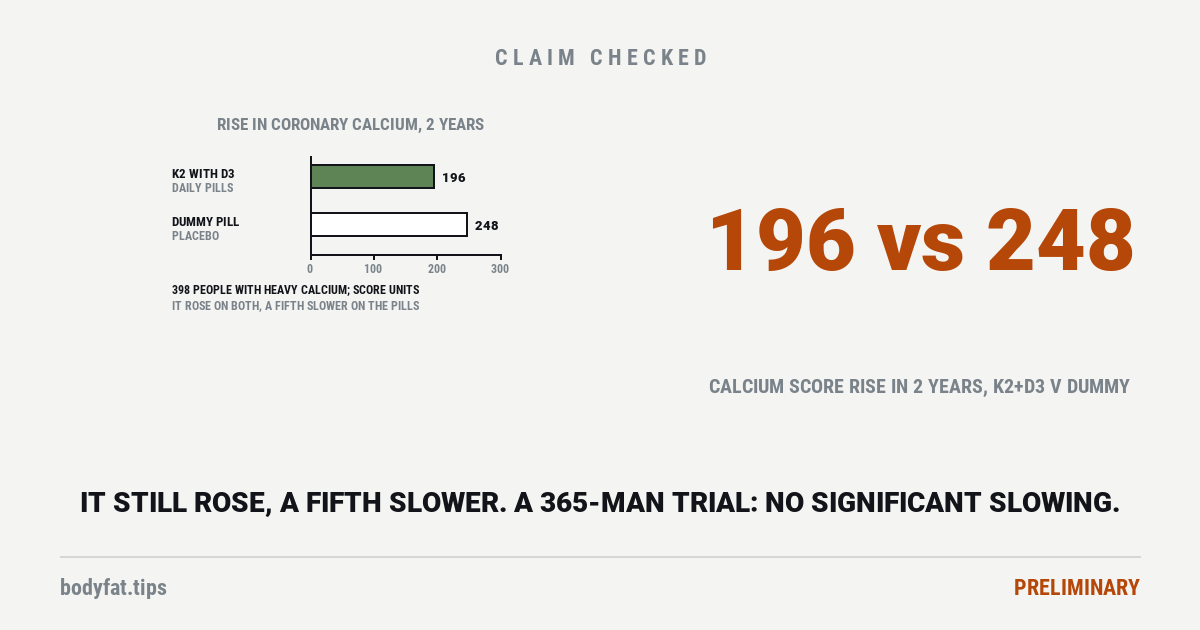
Calcium still built up in the arteries of people taking K2 with D3. In the largest trial of the pair, 398 people who already had heavy calcium in the heart’s arteries, it built up about a fifth more slowly than on a dummy pill over two years. In a trial of 365 men given the same pills, it did not build up significantly more slowly. Whether a slower build-up means fewer heart attacks is the part the pills are sold as having settled, and no trial of the pair that we found was built to count them [3].
The rest of the pitch fares worse, and one part of it is a real hazard. In the longest trial we found that gave K2 on top of vitamin D3 and calcium, bone density fell about as much as in the women given D3 and calcium alone [4]. And vitamin K, including K2, works against warfarin, the blood thinner [5][6].
This is journalism, not medical advice. If you take warfarin or another vitamin K antagonist, do not start vitamin K2 without your prescriber: vitamin K changes how those drugs work, and in healthy volunteers given a drug of the same kind, as little as 10 micrograms of K2 a day was judged to lower the blood-clotting test their doses are set by, to a degree that matters, in at least 40% of them [5][6][7]. The NIH’s fact sheets ask anyone who takes medicines regularly to discuss their vitamin K and vitamin D with their health care provider [5][8]. If you are pregnant or breastfeeding, or have kidney disease, the trials on this page were not done in people like you, or were done in patients under specialist care: ask a clinician or pharmacist before starting.
Does vitamin K2 keep calcium out of your arteries?
The idea starts from real biology. Vitamin K is needed to finish making a handful of proteins: the clotting factors made in the liver; osteocalcin, in bone; and matrix Gla protein, made in the artery wall, which the NIH describes as possibly helping to reduce abnormal calcification [5]. Mice bred without matrix Gla protein die within two months, their arteries calcified until the vessels rupture [9]. Vitamin K2 is not one compound but a family called menaquinones [5]. Most of the trials below used MK-7, the kind made by the bacteria that ferment natto, a Japanese soybean dish [10].
So the test is simple: give people K2, then scan their arteries. The scan used is a calcium score, a number read off a CT scan of the heart’s arteries that measures the hardened, calcified part of plaque; zero means none was seen, and the largest trial below enrolled people at 400 or more, which it called severe [11]. Here are the trials we read, largest first.
Vitamin K2 and calcium in the arteries: the trials
365 men, average age 71, calcium in the aortic valve; the same pills or a dummy; 2 years
Valve calcium rose 275 against 292, a difference that could be chance; coronary calcium not significantly different (203 against 254 in the 304 men with no known coronary heart disease)
42 people with chronic kidney disease, not on dialysis; K2 90 micrograms with D3 10 micrograms, or D3 alone; 9 months
Calcium score rose 58 against 74, a difference that could be chance; the neck artery’s wall thickened less
Calcium scores are in Agatston units, read off a CT scan of the heart, except in the diabetes trial, which scanned the leg arteries for calcification that is forming and measured calcification mass on CT. In people on dialysis, the vitamin K2 trials have mostly found no significant slowing of calcification; a 2026 review lists them [18].
The largest is the 2026 Danish trial. It gave 400 people, 30% of them women, with a median age of 71, either 720 micrograms of K2 (MK-7) with 25 micrograms (1,000 IU) of D3 every day, or a dummy pill, for two years; 398 were analysed [11]. The calcium score rose in both groups: by 196 on the vitamins and by 248 on the dummy [11]. The difference, 52, has a confidence interval, the range the true average difference probably sits in, of 24 to 79 [11]. Fifty-two out of 248 is about a fifth, by our arithmetic. That is a positive result, and it was tested properly: the trial was set up to check a signal from an earlier one [19].
That earlier one is the 365-man trial in the second row. Its main measure was calcium in the aortic valve, and it rose by 275 on the same pills and 292 on the dummy, a gap well inside what chance would produce [12]. Calcium in the heart’s arteries did not rise significantly more slowly either [12]. In the 304 men with no known coronary heart disease, about 60% of each group already at 400 or more, it rose by 203 against 254, with a p-value of 0.089, just the wrong side of the line researchers use for “probably not chance” [13]. In the men who started at 400 or more it rose 288 against 380, which did clear the line [13]; in those who started below 400 it rose 77 against 81, with a p-value of 0.85, nowhere near it [13]. A result found in a slice of one trial is a reason to run another, and the Danish group did: the 2026 trial was sized on exactly those numbers [19], and it found the slower rise again [11].
K2 on its own has one positive trial of this kind. In 180 Dutch patients with heart disease and moderate calcium scores, 90 assigned to 360 micrograms of MK-7 a day and 90 to a dummy pill for two years (85 and 82 analysed), the median score climbed from 135 to 184 on MK-7, against 145 to 214 on the dummy, a significant difference [14]. Its authors are careful: their findings “suggest” that MK-7 “may slow calcification in noncalcified plaques”, and what that means for plaque stability “remains to be determined” [14]. A smaller, shorter trial in 68 people with type 2 diabetes, 35 on MK-7 and 33 on a dummy, found no significant difference on CT after six months [16], and a second kind of scan, which lights up calcification that is actively forming, leaned towards more of it on K2 (p = 0.06) [15].
Then there is stiffness, another thing calcium does to a vessel. In a three-year trial of 244 healthy women past the menopause, 120 given 180 micrograms of MK-7 a day and 124 a dummy, two measures of stiffness improved on MK-7 [20]. That trial was paid for by the MK-7 ingredient maker [20]. So was a later look at a 165-woman trial, done after the fact, in which stiffness rose less on MK-7 in the women past the menopause; three of its authors work for the company or its parent [21]. In 80 older people with vascular disease, 100 micrograms for six months moved neither the main measure of artery function nor stiffness significantly [22]. And in people on dialysis, where vitamin K runs short and arteries calcify fast, the K2 trials have mostly not slowed calcification; a 2026 review concludes that K2 “has not produced reproducible benefits” on CT measures of artery or valve calcium [18]. That review went to its journal in May 2026, before the two 2026 trials above were published [18].
Does a slower calcium score mean healthier arteries?
Not necessarily, and the trialists say so themselves. A calcium score counts only the hardened part of plaque, as our plaque verdict explains. In the 143 people in the Danish trial who also had a CT scan with dye, which shows the soft plaque too, total plaque rose by a similar amount on the vitamins and on the dummy; only the calcified part grew less, by 8 cubic millimetres (range 2 to 13) [11]. The 2026 review lists the problem in a table: a calcium score “cannot distinguish plaque stabilization from harmful calcification” [18].
What would settle it is counting heart attacks, strokes and deaths, and that is where the evidence runs out. The same review says that neither vitamin K1 nor K2 “has demonstrated reductions in major adverse cardiovascular events or mortality” [18]. The 365-man trial counted 10 heart and artery events on the vitamins and 10 on the dummy, and 1 death against 4 [12]. In its 304 men with no known coronary heart disease, a combined count of heart attacks, artery-opening procedures and deaths was 1.9% against 6.7%, which its authors call “hypothesis-generating” [13]. A handful of events, counted on the side of a trial built for something else, points one way. It is not a finding yet. The one trial we found with a K2 group that has reported heart and artery events as a main measure was also built for something else, and gave no D3 [3]. It assigned 132 people on dialysis with an irregular heartbeat to a warfarin-type drug, to a newer blood thinner, or to the newer blood thinner with K2 for 18 months, to see whether calcification slowed, and calcium in the heart’s arteries, the aorta and the heart valves changed by amounts not significantly different among the three groups [23]. Those who finished the 18 months kept their treatment and were followed for longer, and a second report, covering all 132, made heart and artery events its main measure: over a median of nearly two years, the K2 group’s rate of those events, 21.4 per 100 years of follow-up against 26.2, was not significantly different from that of the group on the same blood thinner alone [24].
Has anyone tested D3 plus K2 against D3 alone?
This is the heart of the sales pitch, and it is a fair question to ask of the trials, because most of them compared the vitamins with a dummy pill. A test of the pitch needs a group taking D3 alone. Among trials that have reported a measure of the arteries themselves, we found one such trial [3]. In Poland, 42 people with chronic kidney disease were assigned by computer, two to one, to 90 micrograms of K2 with 10 micrograms (400 IU) of D3, or to D3 alone, for nine months [17]. The calcium score rose by 58 on the pair and 74 on D3 alone, a difference that could easily be chance; the wall of the main neck artery thickened less on the pair, 0.06 mm against 0.14 mm [17]. Its authors concluded that K2 “does not significantly affect the progression of calcification” [17].
On bone there are more. In Denmark, 142 women with thinning bones all took D3 (38 micrograms, 1,520 IU) and calcium every day for three years, and were assigned at random to 375 micrograms of MK-7 or a dummy tablet on top; bone density fell at the hip and spine in both groups, “without differences” between them [4]. In 381 American women who all took D3 and calcium, split three ways between vitamin K1, 45 milligrams of a form of K2 called MK-4, and dummy pills for a year, bone density on MK-4 ended up no different from that on the dummy pills [25]. Smaller trials leaned the other way. In 78 Korean women over 60, 38 assigned to MK-4 on top of D3 and calcium and 40 to D3 and calcium alone, the 45 who finished six months showed density at one spinal bone up by 0.01 g/cm² on MK-4, against a fall of 0.008 [26]. In a Greek trial, dairy foods enriched with D3, calcium and MK-7 raised spine density compared with no enriched dairy, while dairy enriched with D3 and calcium alone did not; the summary does not say whether the two enriched groups differed significantly from each other [27]. And a Chinese trial of 311 men and women tested the reverse of the pitch: adding calcium and D3 to K2 “brought no additional effects” over K2 alone [28].
One Japanese trial that turns up in Google’s results for this search did find more spine density on the pair than on either vitamin alone, in 92 women split four ways [1][29]. Its “vitamin D3” was 1-alpha-hydroxyvitamin D3 at 0.75 micrograms a day, and its K2 was 45 milligrams of MK-4 [29]. The D3 sold in supplements is a different compound, cholecalciferol [8].
Put together, the claim that you need K2 with your D3 has been tested, mostly on bone, mostly in small trials, and the longest of them found no difference in bone density with the K2 added [4]. On the arteries themselves, the one reported test we found was in 42 kidney patients [17].
Is vitamin D3 without K2 dangerous?
For artery calcium, the trials we read say no. The fear has a real root: at toxic doses, vitamin D raises blood calcium so far that, in extreme cases, calcium settles in soft tissues, including the heart’s arteries and valves [8]. In rats, high doses of vitamin D calcify the artery wall within days, and blocking vitamin K with warfarin makes it much worse [30]. Those rats were dosed to toxicity; the calcification tracked how far their blood calcium rose [30].
People taking D3 by mouth, at up to 10,000 IU a day, are a different matter, and they have been scanned. In a Canadian trial, 311 adults aged 55 to 70 were split three ways, about 100 to each dose, to take 400, 4,000 or 10,000 IU of D3 a day for three years. In the 85 who had calcium in a leg artery at the start, it grew slowly, with no sign that the dose made a difference, and nobody developed new artery calcium [31]. The same trial’s main report found bone density falling further on the higher doses: in the forearm by 2.4% on 4,000 IU and 3.5% on 10,000 IU, against 1.2% on 400, and in the shin significantly more only on 10,000; bone strength was not significantly different, and its authors write that the findings do not support a benefit of high doses for bone [32]. The US ceiling for adults is 4,000 IU a day from all sources, so 10,000 IU is two and a half times it, by our arithmetic [8]. In the Women’s Health Initiative, 754 women aged 50 to 59 who had taken calcium with 400 IU of D3, or dummy pills, for about seven years had average calcium scores of 91.6 and 100.5, a gap that could be chance [33]. The large vitamin D trials did not find more heart disease on the vitamin, as our vitamin D verdict sets out. Whether calcium pills raise heart risk is a separate, contested question that our calcium verdict weighs.
Vitamin D3 and K2 for bones: density and fractures
For the MK-7 doses in a D3-and-K2 softgel, the bone trials split. In 244 Dutch women given 180 micrograms a day or a dummy for three years, the same number, dose and length as the stiffness trial above, MK-7 slowed the age-related loss of bone density at the spine and the neck of the thigh bone, but not at the hip as a whole [34]; the MK-7 ingredient maker paid for it [34]. In 334 Norwegian women given 360 micrograms or a dummy for a year, the rate of bone loss was not significantly different [35]. The three-year Danish trial above found no difference [4]. And in the Chinese trial, 90 micrograms a day slowed bone loss at the thigh bone’s neck in women past the menopause, and not in men [28].
The fracture evidence is mostly for a different product. In Japan and other parts of Asia, 45 milligrams of MK-4 a day is used as a treatment for osteoporosis [5]. That is 500 times the 90 micrograms of MK-7 used in several trials on this page, by our arithmetic. A 2006 pooling of seven Japanese MK-4 trials reported large drops in fractures, and in 2018 its journal corrected it. Three of the seven came from one centre whose trials had since been found problematic or retracted, and the authors asked readers to use only their analysis without that centre [36]; the pooling’s senior author also wrote to the journal to alert readers [37]. In that analysis hip fractures were no longer clearly fewer: an odds ratio, a comparison of the odds of a fracture on the vitamin with the odds without it, of 0.30, with a range of 0.05 to 1.74, which includes no difference at all [36]. Spine fractures still came out lower, at 0.40 [36]. Four of the seven trials have since been retracted. The three from that centre were retracted in 2018 and 2019, one of them at the request of its own corresponding author, on the grounds that it contained fabricated trial data for which that author was responsible [38][39][40]. The fourth, a Japanese osteoporosis trial that included a vitamin K group, was retracted in 2025 for what the journal called “impossible data, implausible data” and other failings [41], and it is inside both of the figures the authors asked readers to use [36]. Three researchers wrote to the journal in 2018 that they were concerned the pooling’s conclusions were no longer consistent with that analysis [42].
The largest fracture trial we found, of 4,378 Japanese women with osteoporosis, gave calcium alone (2,193 women) or calcium with MK-4 (2,185) for up to four years [43][3]. It was open-label, meaning the women knew which they were taking, though fractures were assessed blind [43]. New spine fractures, its main measure, were not significantly fewer on MK-4; a lower rate appeared only in women who already had five or more spine fractures [43]. The MK-4 capsules’ maker paid for the trial after its first two years [43]. Smaller open-label trials point the other way: in one of 241 Japanese patients with osteoporosis, 120 given MK-4 and 121 nothing for two years, there were fewer new clinical fractures on MK-4 [44].
That one trial decides the pooled answer. A 2022 pooling of K2 trials in women past the menopause found a risk ratio, the fracture rate on K2 divided by the rate without it, of 0.56 across six trials, with a range of 0.28 to 1.11, which includes no difference at all; in one of the six the comparison group took an active vitamin D drug rather than nothing [45]. Only with the 4,378-woman trial removed, 68% of all the women in that review by our arithmetic, did it become a clear 0.38 [45]. (The review’s own summary prints different figures, 0.96 and 0.43, from those in its results section, which we report here [45].) A 2019 pooling of vitamin K1 and K2 trials, corrected in 2020 to take out the trial retracted in 2025, gives an odds ratio of 0.74 for any clinical fracture, from 0.56 to 0.97; in the trials at low risk of bias it was 0.76, from 0.58 to 1.01, and for spine fractures 0.98 across all its trials [46][47]. For spine fractures in its trials at low risk of bias the figure was 1.06, from 0.91 to 1.24: slightly more of them on vitamin K, a difference that could be chance, which its authors read as vitamin K being “unlikely to have an effect on vertebral fracture” [46]. Its authors call the evidence “insufficient to confirm” a fracture benefit [46]. For keeping bones strong, the exercise evidence is in our osteoporosis verdict.
Does vitamin K2 reduce belly fat?
The claim traces to one trial, and to one slice of it. In 214 Dutch women aged 55 to 65 given 180 micrograms of MK-7 or a dummy for three years, body composition in the group as a whole did not differ between MK-7 and the dummy, by the authors’ account [48]. In the women whose blood marker responded most, the “good responders”, belly fat fell compared with the dummy group, and the authors themselves write that a causal relation between the rise in that marker and body fat “cannot be concluded from these data” [48]. A group picked by how well it responded is not a group picked by chance. The MK-7 ingredient maker supported the trial [48].
Two newer trials looked directly. In 60 Iranian adults with type 2 diabetes, half given 200 micrograms of MK-7 and half a dummy for 12 weeks, the 45 who finished showed body fat not significantly different between the groups [49]. In young Mexican adults carrying extra weight, 22 on 100 micrograms of MK-4 and 24 on a dummy finished 12 weeks alongside diet advice, with no significant difference in body composition [50]. One small trial points the other way: in 84 Iranian women with polycystic ovary syndrome, eight weeks of 90 micrograms of MK-7 lowered body fat and waist size more than a dummy [51].
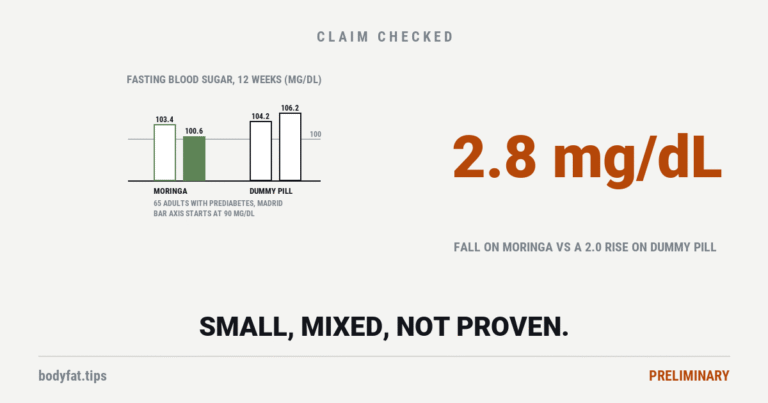
Blood sugar has a little more behind it. A 2026 pooling of eight small trials, which mixed several forms of vitamin K and most of whose trials were run in Iran, found a modest fall in fasting blood sugar and a fall in HbA1c, a three-month average of blood sugar, that its authors call large, in people with diabetes or prediabetes; they call for larger, longer and better trials [52]. In the Danish women who took MK-7 with D3 and calcium, a standard blood-test measure of insulin resistance after a year was not significantly different from the dummy group’s [53].
Vitamin D3 and K2 benefits for testosterone and skin
Testosterone rose in rats. Young male rats fed MK-4 for five weeks had more testosterone in their blood than rats on the ordinary diet [54]. We found no trial that gave K2 to men and measured their testosterone [3]. The one human trial we read that measured male hormones, in the women with polycystic ovary syndrome, found DHT, a male hormone, and the free androgen index, a measure of active male hormone, lower on MK-7, not higher [51]. Testosterone boosters have their own verdict.
For skin as the pair is sold, its look and its ageing, the only published trial we found was of a cream: 30 women applied a K2 cream to one side of the face and neck and a plain cream to the other for eight weeks, and the K2 side measured smoother [55][3]. The company that supplied the K2 paid for it [55]. A cream on your face is not a softgel in your stomach. We found no published trial of the capsules on skin; a registered trial of K2 by mouth in children with eczema is listed as completed, with no results posted [3].
Does vitamin K2 cause blood clots?
“Does vitamin k2 cause blood clots” is searched about 720 times a month, the database’s figure for the past year, with 590 in each of the latest two months (from a paid keyword database, pulled 23 October 2026) [1]. It is a reasonable worry, since vitamin K is needed to make clotting factors. But in healthy people those factors are already “essentially fully carboxylated”, that is, finished [56], so, by our reading, extra vitamin K has little clotting machinery left to switch on. In 42 healthy adults split into seven groups, from a dummy capsule up to 360 micrograms of MK-7 a day, the authors observed “no adverse effects on thrombin generation”, a laboratory measure of how readily blood clots [56]. In 123 people on dialysis, 61 given 360 micrograms and 62 a dummy for a year, the authors found “no detectable effects” on markers of clotting activation, and no difference between the groups in blood-vessel events [57]. The US panel that sets nutrient intakes set no upper limit for vitamin K, because of its low potential for harm, and reported that no harm from vitamin K in food or supplements had been recorded [5].
Warfarin is different, and the difference is the whole point of the drug. Warfarin works by blocking vitamin K; its label lists increased vitamin K intake among the things that weaken its effect, asks for more frequent blood tests when other products are started or stopped, and tells patients to keep their vitamin K intake consistent [6]. The NIH calls the interaction “serious and potentially dangerous” [5]. MK-7 lasts a long time in the blood, and its researchers warned in 2007 that 50 micrograms a day or more could interfere with these drugs [10]; in 2013 the same group found that 10 to 20 micrograms a day was enough to lower the clotting test in many volunteers taking a warfarin-type drug, and wrote that MK-7 supplements “need to be avoided” in people on them [7].
Can I take vitamin D3 and K2 every day? And the side effects
Every trial on this page gave the vitamins every day, for as long as three years [4][34]. For vitamin K there is no official upper limit, because of its low potential for harm [5]. The adequate intake, the amount judged to cover nearly everyone, is 120 micrograms a day for men and 90 for women, from all sources [5]. For vitamin D the US ceiling is 4,000 IU a day from everything, food and pills together [8], and cod liver oil counts toward it too. In the trials, the reported side effects were few: in the kidney trial one person stopped for bowel discomfort [17]; the large Japanese trial recorded more adverse events on MK-4 than on calcium alone, without its summary saying which [43]; the 2026 Dutch trial reported no significant adverse effects [14]. The serious side effect is the interaction above.
Can I take vitamin D with a statin?
Google’s People Also Ask box puts this question beside the others, naming the statin Crestor [1]. The NIH’s vitamin D fact sheet says high intakes of vitamin D, especially from supplements, “might reduce the potency” of three statins, atorvastatin, lovastatin and simvastatin, because they compete for the same enzyme [8]. It names them by brand as well, and Crestor is not among them [8]. Whether that settles it for you is a question for your pharmacist, who knows your doses.
Best time to take it, and for women and men
Vitamin K is absorbed along with the fat in a meal, the way the other fat-soluble vitamins are [5]. One trial on this page asked people to take their tablets with their evening meal [15]. The trials did not compare times of day.
The evidence splits by sex in an awkward way. The bone trials were almost all in women past the menopause [34][35][4][25]; in the one on this page with men in it, the bone result was in women, not men [28]. The 365-man valve trial was all men, aged about 65 to 74 [12]. The largest artery trial was 30% women [11], and the Dutch one 42% [14].
Who these studies were done on
Mostly older people who already had a lot going on in their arteries: a median age of 71 and heavy calcium in the largest trial [11], men with valve calcium [12], patients with heart disease [14], people with diabetes [15] or kidney disease [17]. If you are a healthy adult with clean arteries, the artery evidence here is about other people: the K2 trials in healthy people measured stiffness, bone and blood markers, not calcium in the arteries [20][21][56]. If you already have a high calcium score, the 2026 Danish trial is about people like you, and it found a slower rise, not a lower score [11].
If K2 switches on the protein that guards the arteries, why don’t the trials show clean arteries?
This section is the desk’s own reasoning, and it is labelled as such. The biology says vitamin K activates a calcium-blocking protein in the artery wall. The trials say calcium kept building up on K2. Here are three ways those fit together, each rated.
Answer one: a switched-on protein is a blood test, not an artery. K2 reliably lowered the inactive form of matrix Gla protein in the blood: by 212 units (picomoles per litre) against a rise of 45 on the dummy in the 365-man trial, which then found valve calcium not significantly different [12]. The 2026 review says that blood marker is not validated as a stand-in for the outcome [18]. Both halves are measured; that the marker sells the story is our inference.
Answer two: a slower calcium score is not the same as fewer heart attacks. In the largest trial the calcified part of plaque grew less while total plaque grew about the same [11], and the Dutch trialists write that what slower calcification means for plaque stability “remains to be determined”, while the 2026 review says a calcium score cannot tell a stabilising plaque from harmful calcification [14][18]. This is their caution, measured as far as the scans go; whether it matters for heart attacks is open.
Answer three: if K2 helps, it may help where the calcium already is. The slower rise showed up in men who started at 400 or more [13], then again in a trial built for people at 400 or more [11], and in Dutch patients with heart disease [14], while the trials in people with diabetes, in older people with vascular disease and in dialysis patients mostly did not show a benefit [16][22][18]. That pattern is a surmise from a handful of trials, and the dialysis trials, in people with heavy calcium, cut against it.
Put the three together and here is what we think is true, stated plainly so you can disagree with it: K2 reliably changes a blood marker and may slow calcium build-up in arteries that already carry a lot of it; whether that means fewer heart attacks is the question the pill is sold as having answered, and no one has.
What we could not find, and would like to: a trial of K2 with D3, against D3 alone, large and long enough to count heart attacks and strokes, in people who do not have kidney disease [3]. The nearest is the 2026 Danish trial, which compared the pair with a dummy pill and measured calcium, not events [11]. A registry entry for a trial starting in 2018 to compare K2 and D3 with D3 alone on the aortic valve lists its status as unknown and has posted no results [3]. A Brazilian trial’s registry record, first submitted in January 2023 with a start date of July 2022, lists three groups, K2 with D3, D3 alone and a dummy, with blood-vessel function as the main measure, and gives the trial’s status as unknown, with no results posted. A 2024 paper under the same registration number describes 53 adults randomly assigned to D3 or a dummy for eight weeks and does not mention vitamin K; whether anyone in the trial took K2, we could not tell [58]. The next large K2 trial, of 450 Danish adults with calcium in the heart’s arteries, gives MK-7 without D3 against a dummy for three years and is due to finish in February 2027; its main measure is the calcium score [59]. If you know of the trial we describe, the corrections line on this site is open.
Where “D3 needs K2” came from
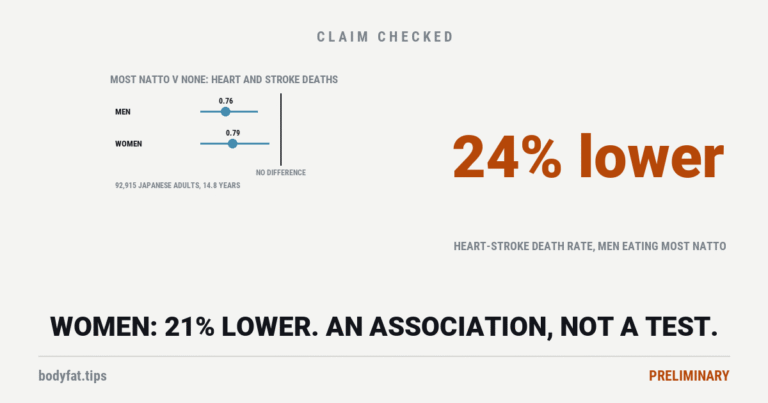
The research behind the story is a 1997 experiment: mice bred without matrix Gla protein died of calcified arteries [9]. Then came people. In 2004 the Rotterdam Study, which followed 4,807 Dutch adults from the early 1990s to 2000, reported that the third who ate the most menaquinone, the K2 found in fermented foods, meat, dairy and eggs [5], had less than half the risk of dying of coronary heart disease of the third who ate the least, a relative risk of 0.43 [60]. That is an observation, not a trial. A clinic page the AI answer cites still quotes it, as a 50% cut [1]. The vitamin D half of the fear comes from rats dosed to toxicity [30].
The framing came from the industry press. In October 2013 a supplement-industry trade magazine ran the headline that the maker’s branded K2 and vitamin D “May Slow Progression of Arterial Calcification”, about the 42-patient kidney trial, then known only from a meeting abstract, and quoted the ingredient maker’s chief executive calling it “the first clinical evaluation showing that progression of arterial calcification can be prevented with supplemental vitamin K2” [61]. When the paper appeared in 2015, the calcium-score difference could be chance [17]. In 2022 a trade site headlined that K2 with D “reduces heart attack risk” [62], about the trial whose authors called their own result neutral and “hypothesis-generating” [13].
We could not trace who first said that D3 without K2 is dangerous. Today it is everywhere you search. Google’s AI answer for this search says that without enough K2, “excess calcium from D3 can accumulate in soft tissues and blood vessels”, citing clinics, the ingredient maker, a supplement brand, a video and a 2017 review [1]. That review’s authors write that combined D and K “might be” more effective than either alone, and that few trials had studied heart outcomes [63]. A symptom-checker company’s page in the same results is titled “STOP Taking Vitamin D3 Without K2! Critical Doctor’s Protocol”, published 18 March 2026 [1]. A physician’s video channel in the results has one video called “How to Use D3 and K2 to Heal Arteries” (23 September 2026) and another called “Don’t take Vitamin D3 & Vit K2 together” (29 November 2025) [1]. And a Houston wellness clinic’s post, the AI answer’s first citation, says a 2013 study in the journal Osteoporosis International found that women taking K2 and D3 had better bone density and fewer fractures “compared to those taking D3 alone” [1]. The 2013 trial of K2 in that journal, as its summary describes it, compared MK-7 with a dummy capsule, describes no D3-alone group, and reports bone density and vertebral height, not fewer fractures [34].
The product is the pair in one softgel. A national vitamin brand’s page says “Vitamin K2 supports healthy artery function” [1], and the ingredient maker’s page says K2’s ability to “prevent calcium buildup in arteries” is one of its most important benefits [2].
None of this is aimed at anyone taking the pair. The biology is real, the worry about calcium in arteries is reasonable, and the newest trials do point somewhere. It is the sellers who turned a slower-rising scan in people with heavy calcium into a promise about everyone’s arteries.
What this is rated, and what the rating covers
Preliminary — for the claim that taking vitamin K2 with D3 slows the build-up of calcium in the heart’s arteries. The one large trial that found it was in people who already had heavy calcium.
It was tested, and the results conflict. The largest trial of the pair found calcium built up about a fifth more slowly than on a dummy pill, in people who already had heavy calcium [11]; a 365-man trial of the same pills found no significant difference on the valve or the heart’s arteries [12], and in its men who started below 400 the rise was 77 against 81 [13]; K2 alone slowed the calcium score in one two-year trial [14], while a six-month trial in diabetes, which measured calcification in the leg and other arteries rather than a heart calcium score, found no significant slowing [15][16]; and in dialysis patients the K2 trials have mostly not slowed it [18]. Calcium rose on the vitamins in every trial, and no trial of the pair that we found was built to count heart attacks [3]. The one trial we found of the pair against D3 alone that reported on the arteries was in 42 kidney patients, and its calcium-score difference could be chance [17].
Each narrower claim, rated alone, in words. That K2 with D3 keeps calcium from building up in your arteries at all, keeps it out, or clears it: Unsupported, of the tested kind; it rose on the vitamins in every trial above, and our plaque verdict rates vitamins that remove plaque the same way [11][12]. That K2 with D3 prevents heart attacks or strokes: Preliminary; untested as a trial’s main measure for the pair, with a few events counted on the side of one trial, as many on the vitamins as on the dummy overall and fewer in one subgroup [12][13]; K2 without D3, added to a blood thinner in dialysis patients, was not significantly different on such events in the one trial we found that has reported them as a main measure, in a report on the longer follow-up of a trial built to measure calcification [23][24]. That D3 without K2 is dangerous to your arteries: Unsupported, of the tested kind; at doses up to 10,000 IU a day for three years, leg-artery calcium did not grow significantly faster on the higher doses [31], and the danger in the rat studies came from toxic doses [30][8]. Doses above the US ceiling raise a separate question, for bone [32].
That K2, with or without D3, protects bone density: Preliminary; the MK-7 trials split, and the longest that added it to D3 and calcium found no difference [34][35][4]. That it prevents fractures: Preliminary; the case comes mostly from 45 milligrams of MK-4, whose largest trial found no significant drop in spine fractures, and whose 2006 pooling lost its hip result once one centre’s trials were set aside and still holds a trial retracted in 2025. The later poolings of vitamin K trials clear chance only without their largest trial, or with their higher-risk trials counted, and in the 2019 pooling’s trials at low risk of bias spine fractures were slightly more common on vitamin K, within what chance would produce. The MK-7 doses in a softgel were tested on bone density rather than in trials built around fractures [43][36][41][45][46][47][34]. That it lowers blood sugar: Preliminary; the one pooling mixed several forms of vitamin K in small trials, and a year of MK-7 in the Danish women left a measure of insulin resistance not significantly different from the dummy group’s [52][53]. That it raises testosterone: Preliminary, on rat evidence alone [54]. That it reduces belly fat: Unsupported, of the tested kind; the three-year trial found no difference in the group as a whole [48]. That the capsules improve skin: Unsupported, of the untested kind, as far as published trials go; the one published trial we found was of a cream [55].
What is not rated here: K2 for kidney patients, which is a question for their specialists; the evidence on calcium pills, which our calcium verdict covers; tiredness, which our low vitamin D verdict covers; and the frame in the section above, which is this desk’s reasoning from the evidence rather than a result the evidence delivered. It is marked as ours so that you can weigh it as ours.
This is journalism, not medical advice. Whether to take either vitamin, at what dose, and above all alongside warfarin or another blood thinner, belongs with the prescriber or pharmacist who knows your medicines. How we read a study, and what each tier means, is set out here.
Sources
[1] Search data from a paid keyword database: the monthly US search volumes for “vitamin d3 and k2 benefits”, “vitamin k2 benefits” and “does vitamin k2 cause blood clots”, pulled 23 October 2026, with each one’s monthly series, and Google’s results, People Also Ask questions, related searches and AI answer for “vitamin d3 and k2 benefits”, pulled the same day. Pages the AI answer cites, read on 23 October 2026: a Houston wellness clinic’s blog post (posted 13 June 2025); a Fort Worth internal-medicine practice’s blog; a symptom-checker company’s “Doctor’s Note” (published 18 March 2026); a national vitamin brand’s product page for D3 and K2 softgels (listed as discontinued when read); the K2 ingredient maker’s page, read in the Internet Archive’s copy of 12 May 2026 because the live page refused our request [2]; and a 2017 review [63]. Five other cited pages, from clinics, a telehealth company and a supplement brand, were not read. The two videos named on this page were seen as titles and dates in Google’s results, not watched. Kept with this page’s records.
[2] The K2 ingredient maker’s consumer website: “Best Vitamin D3 with K2: Benefits for Summer Wellness”. Read in full in the Internet Archive’s copy of 12 May 2026; the live page refused our request on 23 October 2026. A seller’s page, cited as evidence of how the pair is sold; its footer says its statements have not been approved by the US Food and Drug Administration.
[3] Our searches, 23 October 2026, for the absence sentences on this page, by the writer and then two correctors; the desk re-runs them before publishing. Trials of K2 with D3 against D3 alone: PubMed by title and abstract in two wordings (54 and 31 records, every title read), ClinicalTrials.gov (81 and 58 records in two searches for K2 or MK-7 with vitamin D, every record read for its groups; besides the kidney trial [17], seven registered comparisons of K2 with D3 against D3 alone: one on the aortic valve, started in 2018, with no results posted; one on blood-vessel function in adults with overweight or obesity, registered with a K2-with-D3 group, under whose registration number a 2024 paper describes only D3 and dummy groups and does not mention vitamin K [58]; one in children on dialysis, published with blood markers only; and four on children’s fracture healing, markers in diabetes, vertigo and the gut microbiome, none with results posted), the table of trials in [18], and an ordinary web search, its first page read. K2 trials counting heart attacks, strokes or deaths as their main measure: PubMed in five wordings (44, 49, 33, 49 and 11 records, every title read; the third and fourth found [24]), ClinicalTrials.gov (100 records, and 496 in a second search, 82 of them with K2 among the treatments or in the title, two of those with heart and artery events among their main measures: the follow-up of [23], and a trial of K2 alone in peritoneal dialysis, registered in 2021 with them beside arterial stiffness, though its published protocol makes them secondary; its status is unknown, with no results posted and no report in PubMed beyond that protocol), the 2026 review [18], and an ordinary web search. K2 and testosterone in men: PubMed in two wordings (59 and 5 records), ClinicalTrials.gov (one record, of warfarin), and an ordinary web search. K2 and skin: PubMed in three wordings (22, 19 and 3 records), ClinicalTrials.gov (47 records: two cream trials, and one of K2 by mouth in children with eczema, completed with no results posted and no paper found), and an ordinary web search. The largest fracture trial: the table of included trials in [45], PubMed (55 records of K2 fracture trials), and ClinicalTrials.gov (27 records). Trials adding K2 to D3 and calcium, for the longest: the same searches as the first. The record is kept with this page.
[4] Rønn SH, Harsløf T, et al. The effect of vitamin MK-7 on bone mineral density and microarchitecture in postmenopausal women with osteopenia, a 3-year randomized, placebo-controlled clinical trial. Osteoporosis International 2021;32(1):185–191. 142 women. Read as its published abstract, with its funding statement read on the publisher’s page: financial support from a company that also supplied the MK-7, the dummy tablets, the calcium and the vitamin D, and grants from Danish foundations. doi:10.1007/s00198-020-05638-z
[5] US National Institutes of Health, Office of Dietary Supplements. Vitamin K: fact sheet for health professionals. Updated 22 October 2026. Read in full on 23 October 2026. A government fact sheet; no DOI.
[6] US prescribing information for warfarin sodium tablets (a generic maker’s label), on the US National Library of Medicine’s DailyMed, set id 558b7a0d-5490-4c1b-802e-3ab3f1efe760, version 20, effective 29 May 2026. Read in full on 23 October 2026. Approved by the US Food and Drug Administration. A label; no DOI.
[7] Theuwissen E, Teunissen KJ, Spronk HM, Hamulyak K, Ten Cate H, Shearer MJ, Vermeer C, Schurgers LJ. Effect of low-dose supplements of menaquinone-7 (vitamin K2) on the stability of oral anticoagulant treatment: dose-response relationship in healthy volunteers. Journal of Thrombosis and Haemostasis 2013;11(6):1085–1092. 18 volunteers given acenocoumarol, a drug of the same kind as warfarin. Read as its published abstract, with its methods and its disclosure read in the Internet Archive’s April 2025 copy of the publisher’s full text: supported by the MK-7 ingredient maker, which also had the capsules made and delivered them. doi:10.1111/jth.12203
[8] US National Institutes of Health, Office of Dietary Supplements. Vitamin D: fact sheet for health professionals. Updated 27 June 2025. Read in full on 23 October 2026. A government fact sheet; no DOI.
[9] Luo G, Ducy P, McKee MD, Pinero GJ, Loyer E, Behringer RR, Karsenty G. Spontaneous calcification of arteries and cartilage in mice lacking matrix GLA protein. Nature 1997;386(6620):78–81. Mice. Read as its published abstract. Its funding statement was not read. doi:10.1038/386078a0
[10] Schurgers LJ, Teunissen KJ, Hamulyak K, Knapen MH, Vik H, Vermeer C. Vitamin K-containing dietary supplements: comparison of synthetic vitamin K1 and natto-derived menaquinone-7. Blood 2007;109(8):3279–3283. Healthy volunteers. Read as its published abstract, with its author list, acknowledgment and disclosure read in the Internet Archive’s July 2013 copy of the journal’s full text: supported in part by research funding from a company that then marketed the MK-7 product tested; one author, that company’s scientific adviser while the study ran, gives the MK-7 ingredient maker as his affiliation and was on its board when the paper appeared. The other authors declare no competing interests. doi:10.1182/blood-2006-08-040709
[11] Hasific S, Øvrehus KA, Mejldal A, Hosbond S, Lambrechtsen J, Kumarathurai P, et al. Vitamin K2 and D3 supplementation in patients with severe coronary artery calcification: the DANCODE trial. Circulation 2026, published online 28 August 2026. 400 randomised, 398 analysed. Read as its published abstract: the publisher’s page refused our requests, no archived copy was found, and Europe PMC lists the paper as subscription-only. Its own funding statement was not read; its published protocol [19] says the tablets and dummy tablets were given free by two companies, a K2 ingredient maker among them. Its senior author was the first author of [12] and declared there serving on a panel reviewing the safety of the K2 ingredient for use in US foods. Registered as NCT05500443. doi:10.1161/CIRCULATIONAHA.126.082363
[12] Diederichsen ACP, Lindholt JS, Möller S, et al. Vitamin K2 and D in patients with aortic valve calcification: a randomized double-blinded clinical trial. Circulation 2022;145(18):1387–1397. 365 men. Read in full on PubMed Central. Supported by the Danish Heart Foundation, the Region of Southern Denmark’s research council and the Novo Nordisk Foundation; the tablets and dummy tablets were given free by a K2 ingredient maker and a second company; the first author has served on a panel reviewing the safety of the K2 ingredient for use in US foods. doi:10.1161/CIRCULATIONAHA.121.057008
[13] Hasific S, Oevrehus KA, Lindholt JS, et al. Effects of vitamin K2 and D supplementation on coronary artery disease in men: a RCT. JACC: Advances 2023;2(9):100643. The 304 men, of the 389 that [12] enrolled, with no known coronary heart disease at the start. Read in full on PubMed Central. Same funders and tablet suppliers as [12]; the senior author has served on the same safety panel. doi:10.1016/j.jacadv.2023.100643
[14] Vossen LM, de Leeuw PW, Schurgers LJ, Heuts S, Adriaans BP, de Haan C, van Varik BJ, Kroon AA. Two years of menaquinone-7 supplementation and coronary artery calcification: a randomized clinical trial. JAMA Cardiology 2026;11(8):719–726. 180 patients. Read as its published abstract, with its funding and conflict statements read in its PubMed Central record, where the full text is embargoed until June 2027. Supported by the Dutch Heart Foundation; the MK-7 ingredient maker supplied the tablets free; one author reports grants from that company and shares in a laboratory company. doi:10.1001/jamacardio.2026.1279
[15] Zwakenberg SR, de Jong PA, Bartstra JW, et al. The effect of menaquinone-7 supplementation on vascular calcification in patients with diabetes: a randomized, double-blind, placebo-controlled trial. American Journal of Clinical Nutrition 2019;110(4):883–890. 68 patients. Read in full on PubMed Central. Supported by a Dutch Heart Foundation grant; the MK-7 tablets came from the MK-7 ingredient maker; the authors report no conflicts. doi:10.1093/ajcn/nqz147
[16] Bartstra JW, Draaisma F, Zwakenberg SR, et al. Six months vitamin K treatment does not affect systemic arterial calcification or bone mineral density in diabetes mellitus 2. European Journal of Nutrition 2021;60(3):1691–1699. The same 68 patients as [15]. Read in full on PubMed Central. Dutch Heart Foundation; no conflicts declared. doi:10.1007/s00394-020-02412-z
[17] Kurnatowska I, Grzelak P, Masajtis-Zagajewska A, et al. Effect of vitamin K2 on progression of atherosclerosis and vascular calcification in nondialyzed patients with chronic kidney disease stages 3–5. Polish Archives of Internal Medicine 2015;125(9):631–640. 42 patients, 29 on K2 with D3 and 13 on D3 alone. Read in full in the journal’s PDF. The K2-with-D3 and D3 tablets were made by the MK-7 ingredient maker; the authors declare no conflict of interest. doi:10.20452/pamw.3041
[18] Brandenburg V, Keil N, Krüger T, Salmhofer H, Saritas T. Vitamin K and vascular calcification: from biological plausibility to clinical realism. Clinical Kidney Journal 2026;19(10):sfag249. A narrative review, received May 2026, before [11] and the full report of [14] were published. Read in full on PubMed Central. The authors declare no conflicts. doi:10.1093/ckj/sfag249
[19] Hasific S, Øvrehus KA, Hosbond S, et al. Effects of vitamins K2 and D3 supplementation in patients with severe coronary artery calcification: a study protocol for a randomised controlled trial. BMJ Open 2023;13(7):e073233. Read in full on PubMed Central. Its funding line: private foundations and companies were being sought; the study tablets, including the dummy tablets, were given free by a K2 ingredient maker and a second company, which, it says, have no part in the design, analysis or reporting. Competing interests: none declared. doi:10.1136/bmjopen-2023-073233
[20] Knapen MH, Braam LA, Drummen NE, Bekers O, Hoeks AP, Vermeer C. Menaquinone-7 supplementation improves arterial stiffness in healthy postmenopausal women: a double-blind randomised clinical trial. Thrombosis and Haemostasis 2015;113(5):1135–1144. 244 women. Read as its published abstract, with its funding note read on the publisher’s page in the Internet Archive’s April 2026 copy: supported by the MK-7 ingredient maker. Its senior author’s affiliation is a vitamin K research unit, VitaK, at Maastricht University. doi:10.1160/TH14-08-0675
[21] de Vries F, Bittner R, Maresz K, Machuron F, Gåserød O, Jeanne JF, Schurgers LJ. Effects of one-year menaquinone-7 supplementation on vascular stiffness and blood pressure in post-menopausal women. Nutrients 2025;17(5):815. A later look at a 165-woman trial. Read in full on PubMed Central. Funded by the MK-7 ingredient maker; three authors are employees of it or its parent company, and the others report research funding from it. doi:10.3390/nu17050815
[22] Fulton RL, McMurdo ME, Hill A, et al. Effect of vitamin K on vascular health and physical function in older people with vascular disease: a randomised controlled trial. Journal of Nutrition, Health & Aging 2016;20(3):325–333. 80 people aged 70 and over. Read in full on PubMed Central. Funded by a Scottish heart and stroke charity; the capsules came from the MK-7 ingredient maker. doi:10.1007/s12603-015-0619-4
[23] De Vriese AS, Caluwé R, Pyfferoen L, De Bacquer D, De Boeck K, Delanote J, De Surgeloose D, Van Hoenacker P, Van Vlem B, Verbeke F. Multicenter randomized controlled trial of vitamin K antagonist replacement by rivaroxaban with or without vitamin K2 in hemodialysis patients with atrial fibrillation: the Valkyrie study. Journal of the American Society of Nephrology 2020;31(1):186–196. 132 patients on dialysis with an irregular heartbeat, assigned at random and open-label to a warfarin-type drug (44), rivaroxaban (46) or rivaroxaban with 2,000 micrograms of MK-7 three times a week (42), for 18 months. Its main measures were the change in calcium in the heart’s arteries and the aorta and in arterial stiffness; these, and calcium in the heart valves, changed by amounts not significantly different among the three groups. Its methods, results and statements read on PubMed Central; its supplementary file was not read. Paid for by a drug company spun off from the MK-7 ingredient maker in 2017, with the MK-7 supplied by the ingredient maker; the paper says neither company had a role in the trial’s design, in the collection, analysis or interpretation of the data, or in submitting the results. The ingredient maker’s own releases, read on 23 October 2026, call it the spin-off’s majority shareholder in July 2019 and give its share of the spin-off’s equity as 54.14% in February 2021. Three authors report fees or grants from drug companies and dialysis-equipment makers, outside this work. Registered as NCT02610933. doi:10.1681/ASN.2019060579
[24] De Vriese AS, Caluwé R, Van Der Meersch H, De Boeck K, De Bacquer D. Safety and efficacy of vitamin K antagonists versus rivaroxaban in hemodialysis patients with atrial fibrillation: a multicenter randomized controlled trial. Journal of the American Society of Nephrology 2021;32(6):1474–1483. 132 patients on dialysis with an irregular heartbeat, assigned to a warfarin-type drug (44), rivaroxaban (46) or rivaroxaban with 2,000 micrograms of MK-7 three times a week (42). This is the report on the longer, observational follow-up of the trial in [23], which was designed to measure calcification over 18 months: those who finished it kept their assigned treatment and were followed for at least 18 months more, and for all 132, over a median of 1.88 years, this report’s main measure was fatal and nonfatal heart and artery events; the two rivaroxaban groups were not significantly different (P = 0.55). Its methods, results and statements read on PubMed Central. This report declares no funding; the trial itself was paid for by a drug company spun off from the MK-7 ingredient maker, which supplied the MK-7 [23]. Its first author reports research funding from a drug company, from that spin-off and from the ingredient maker, among other roles. Registered as NCT03799822. doi:10.1681/ASN.2020111566
[25] Binkley N, Harke J, Krueger D, et al. Vitamin K treatment reduces undercarboxylated osteocalcin but does not alter bone turnover, density, or geometry in healthy postmenopausal North American women. Journal of Bone and Mineral Research 2009;24(6):983–991. 381 women. Read in full on PubMed Central. Supported by US National Institutes of Health grants; the MK-4 and its dummy were supplied by the company that makes the MK-4 capsules, and the vitamin K1 by a vitamin supplier. doi:10.1359/jbmr.081254
[26] Je SH, Joo NS, Choi BH, et al. Vitamin K supplement along with vitamin D and calcium reduced serum concentration of undercarboxylated osteocalcin while increasing bone mineral density in Korean postmenopausal women over sixty-years-old. Journal of Korean Medical Science 2011;26(8):1093. 78 women randomised, 45 analysed. Read in full on PubMed Central, which holds no funding, acknowledgement or conflict section for it. doi:10.3346/jkms.2011.26.8.1093
[27] Kanellakis S, Moschonis G, Tenta R, et al. Changes in parameters of bone metabolism in postmenopausal women following a 12-month intervention period using dairy products enriched with calcium, vitamin D, and phylloquinone (vitamin K1) or menaquinone-7 (vitamin K2): the Postmenopausal Health Study II. Calcified Tissue International 2012;90(4):251–262. Read as its published abstract, with its funding statement read on the publisher’s page: a research grant from a dairy company; two of the eight authors give that company as their affiliation and have advisory roles to it, and the corresponding author has an advisory role to its Greek arm; the paper says the sponsor had no role in collecting or analysing the data. doi:10.1007/s00223-012-9571-z
[28] Zhang Y, Liu Z, Duan L, et al. Effect of low-dose vitamin K2 supplementation on bone mineral density in middle-aged and elderly Chinese: a randomized controlled study. Calcified Tissue International 2020;106(5):476–485. 311 men and women. Read as its published abstract, with its funding statement read on the publisher’s page: a Heilongjiang provincial research programme; no conflicts declared. doi:10.1007/s00223-020-00669-4
[29] Iwamoto J, Takeda T, Ichimura S. Effect of combined administration of vitamin D3 and vitamin K2 on bone mineral density of the lumbar spine in postmenopausal women with osteoporosis. Journal of Orthopaedic Science 2000;5(6):546–551. 92 women. Read as its published abstract; it appears in Google’s results for this page’s search. Its funding statement was not read. doi:10.1007/s007760070003
[30] Price PA, Faus SA, Williamson MK. Warfarin-induced artery calcification is accelerated by growth and vitamin D. Arteriosclerosis, Thrombosis, and Vascular Biology 2000;20(2):317–327. Rats. Read as its published abstract. PubMed lists a US National Heart, Lung, and Blood Institute grant; its funding statement was not read. doi:10.1161/01.atv.20.2.317
[31] Billington EO, Burt LA, Plett R, Rose MS, Boyd SK, Hanley DA. Effect of high-dose vitamin D supplementation on peripheral arterial calcification: secondary analysis of a randomized controlled trial. Osteoporosis International 2020;31(11):2141–2150. 311 adults aged 55 to 70. Read as its published abstract, with its funding statement read on the publisher’s page: funded by a Canadian foundation in response to the investigators’ proposal; two authors report fees or grants from drug companies. doi:10.1007/s00198-020-05500-2
[32] Burt LA, Billington EO, Rose MS, Raymond DA, Hanley DA, Boyd SK. Effect of high-dose vitamin D supplementation on volumetric bone density and bone strength: a randomized clinical trial. JAMA 2019;322(8):736–745. The main report of the trial in [31]: 311 adults aged 55 to 70, 287 of whom finished. Read as its published abstract, with its funding and conflict statements read on PubMed Central: funded by a Canadian foundation in response to the investigators’ proposal, with no role in the study; three authors report grants, fees or advisory roles with drug companies, and one part-owns the software company whose analysis software was used, free of charge. Corrected in 2019 for the placement of data in one figure. Registered as NCT01900860. doi:10.1001/jama.2019.11889
[33] Manson JE, Allison MA, Carr JJ, et al. Calcium/vitamin D supplementation and coronary artery calcification in the Women’s Health Initiative. Menopause 2010;17(4):683–691. 754 women aged 50 to 59. Read as its published abstract, with its funding and conflict statements read in the authors’ manuscript on PubMed Central: the US National Heart, Lung, and Blood Institute funds the Women’s Health Initiative and supported the scan study; a drug company provided the calcium and vitamin D pills and the dummy pills and had no other role; no author reports a conflict. doi:10.1097/gme.0b013e3181d683b5
[34] Knapen MH, Drummen NE, Smit E, Vermeer C, Theuwissen E. Three-year low-dose menaquinone-7 supplementation helps decrease bone loss in healthy postmenopausal women. Osteoporosis International 2013;24(9):2499–2507. 244 women. Read as its published abstract, with its funding statement read on the publisher’s page: funded by the MK-7 ingredient maker. doi:10.1007/s00198-013-2325-6
[35] Emaus N, Gjesdal CG, Almås B, et al. Vitamin K2 supplementation does not influence bone loss in early menopausal women: a randomised double-blind placebo-controlled trial. Osteoporosis International 2010;21(10):1731–1740. 334 women. Read as its published abstract, with its funding statement read on the publisher’s page: grants from the Norwegian Osteoporosis Association and the Northern Norway Regional Health Authority; a company provided the study capsules. doi:10.1007/s00198-009-1126-4
[36] Cockayne S, Adamson J, Lanham-New S, Shearer MJ, Gilbody S, Torgerson DJ. Vitamin K and the prevention of fractures: systematic review and meta-analysis of randomized controlled trials. Archives of Internal Medicine 2006;166(12):1256–1261. Read as its published abstract as updated after 2018, with its results, its table of trial outcomes, its figure captions and its financial disclosure (“None”) read in the Internet Archive’s July 2026 copy of the journal’s page. By that table its seven fracture trials are three from one centre, all since retracted [38], [39], [40]; the Yamaguchi trial, retracted in 2025 [41]; and three others. doi:10.1001/archinte.166.12.1256. Its journal’s correction, “Caution of conclusions of a meta-analysis including problematic trials”, JAMA Internal Medicine 2018;178(6):875–876, read in full in the Internet Archive’s August 2022 copy of the journal’s page, says the review’s conclusions rested on trials since found problematic or retracted and asks readers to use only the analysis without that centre’s trials. doi:10.1001/jamainternmed.2018.1140
[37] Torgerson DJ. Caution to readers about systematic review on vitamin K and prevention of fractures that included problematic trials. JAMA Internal Medicine 2018;178(6):863–864. A letter by the senior author of [36]. Read as its opening paragraph only, in the Internet Archive’s April 2026 copy of the journal’s page; the rest is behind the publisher’s paywall, and the publisher’s page refused our requests. doi:10.1001/jamainternmed.2018.1127
[38] Sato Y, Honda Y, Kuno H, Oizumi K. Menatetrenone ameliorates osteopenia in disuse-affected limbs of vitamin D- and K-deficient stroke patients. Bone 1998;23(3):291–296. One of the seven fracture trials in [36]. Retracted (Bone 2019;124:167) at the request of the journal’s editor-in-chief, over concerns about the integrity of the data, authorship and ethical approval, as the retraction note on the paper’s page says; that note was read in the Internet Archive’s April 2024 copy of the page, and the retraction is listed by Crossref. PubMed’s record did not mark it retracted when we checked, on 23 October 2026. The paper itself was not read. doi:10.1016/S8756-3282(98)00108-2
[39] Sato Y, Honda Y, Kaji M, Asoh T, Hosokawa K, Kondo I, Satoh K. Amelioration of osteoporosis by menatetrenone in elderly female Parkinson’s disease patients with vitamin D deficiency. Bone 2002;31(1):114–118. One of the seven fracture trials in [36]. Retracted (Bone 2018;106:212), as its PubMed record shows; the retraction notice and the paper were not read. doi:10.1016/S8756-3282(02)00783-4
[40] Sato Y, Kanoko T, Satoh K, Iwamoto J. Menatetrenone and vitamin D2 with calcium supplements prevent nonvertebral fracture in elderly women with Alzheimer’s disease. Bone 2005;36(1):61–68. One of the seven fracture trials in [36]. Retracted. The retraction notice (Bone 2018;106:213) was read in full in the paper’s PubMed record; the paper itself was not read. doi:10.1016/j.bone.2004.09.018
[41] Ishida Y, Kawai S. Comparative efficacy of hormone replacement therapy, etidronate, calcitonin, alfacalcidol, and vitamin K in postmenopausal women with osteoporosis: the Yamaguchi Osteoporosis Prevention Study. American Journal of Medicine 2004;117(8):549–555. One of the seven fracture trials in [36], and the trial removed from [46] by its 2020 correction [47]. Retracted in 2025 (American Journal of Medicine 2025;138(5):918–919). The retraction notice was read in full in the paper’s PubMed record; the paper itself was not read. doi:10.1016/j.amjmed.2004.05.019
[42] Grey A, Avenell A, Bolland M. Revised meta-analysis of vitamin K and fractures. JAMA Internal Medicine 2018;178(8):1135. A letter about [36]. Read as its opening paragraph only, in the Internet Archive’s April 2024 copy of the journal’s page; the rest is behind the publisher’s paywall, and the publisher’s page refused our requests. doi:10.1001/jamainternmed.2018.2853
[43] Inoue T, Fujita T, Kishimoto H, et al. Randomized controlled study on the prevention of osteoporotic fractures (OF study): a phase IV clinical study of 15-mg menatetrenone capsules. Journal of Bone and Mineral Metabolism 2009;27(1):66–75. 4,378 women, open label with blinded assessment. Read as its published abstract, with its funding statement read on the publisher’s page: Japan’s Ministry of Health, Labour and Welfare for the first two years, and after that the company that makes the MK-4 capsules. doi:10.1007/s00774-008-0008-8
[44] Shiraki M, Shiraki Y, Aoki C, Miura M. Vitamin K2 (menatetrenone) effectively prevents fractures and sustains lumbar bone mineral density in osteoporosis. Journal of Bone and Mineral Research 2000;15(3):515–521. 241 patients, open label. Read as its published abstract: the publisher’s pages refused our requests. Its funding statement was not read. doi:10.1359/jbmr.2000.15.3.515
[45] Ma ML, Ma ZJ, He YL, et al. Efficacy of vitamin K2 in the prevention and treatment of postmenopausal osteoporosis: a systematic review and meta-analysis of randomized controlled trials. Frontiers in Public Health 2022;10:979649. 16 trials, 6,425 women. Read in full on PubMed Central. Funded by two Jiangsu research programmes; no conflicts declared. Its summary and its results section give different fracture figures. doi:10.3389/fpubh.2022.979649
[46] Mott A, Bradley T, Wright K, et al. Effect of vitamin K on bone mineral density and fractures in adults: an updated systematic review and meta-analysis of randomised controlled trials. Osteoporosis International 2019;30(8):1543–1559. 36 studies. Read as its published abstract, with its funding and conflict statements read on the publisher’s page: no funding; no conflicts. Its results and discussion, with the spine-fracture figure for its trials at low risk of bias, read in the authors’ accepted manuscript in the White Rose universities’ repository, not in the version of record; its 2020 correction [47] says the low-risk results were unchanged. doi:10.1007/s00198-019-04949-0
[47] Mott A, Bradley T, Wright K, et al. Correction to: Effect of vitamin K on bone mineral density and fractures in adults. Osteoporosis International 2020;31(11):2269–2270. Read in full on the publisher’s page. doi:10.1007/s00198-020-05586-8
[48] Knapen MHJ, Jardon KM, Vermeer C. Vitamin K-induced effects on body fat and weight: results from a 3-year vitamin K2 intervention study. European Journal of Clinical Nutrition 2018;72(1):136–141. 214 women. Read as its published abstract, with its funding note read on the publisher’s page: supported by the MK-7 ingredient maker; no conflicts declared. doi:10.1038/ejcn.2017.146
[49] Karamzad N, Faraji E, Adeli S, Sullman MJM, Pourghassem Gargari B. The effect of menaquinone-7 supplementation on dp-ucMGP, PIVKAII, inflammatory markers, and body composition in type 2 diabetes patients: a randomized clinical trial. Nutrition & Diabetes 2022;12(1):15. 60 patients, 45 analysed. Read as its published abstract, with its funding statement read on the publisher’s page: partly funded by Tabriz University of Medical Sciences; no competing interests. doi:10.1038/s41387-022-00192-5
[50] Olivares-Ochoa XC, Llamas-Covarrubias, Sánchez-Enríquez, López-Quintero, et al. Vitamin K2 supplementation reduces cardiometabolic risk factors in young adults with overweight and obesity: a randomized placebo-controlled trial. Biomedicines 2026;14(5):1011. 46 completed. Read as its published abstract, with its funding statement read on PubMed Central: no external funding; no conflicts declared. Registered as NCT05995522. doi:10.3390/biomedicines14051011
[51] Tarkesh F, Namavar Jahromi B, Hejazi N, Tabatabaee H. Beneficial health effects of menaquinone-7 on body composition, glycemic indices, lipid profile, and endocrine markers in polycystic ovary syndrome patients. Food Science & Nutrition 2020;8(10):5612–5621. 84 women. Read as its published abstract, with its funding statement read on PubMed Central: a Shiraz University of Medical Sciences grant; no conflicts declared. doi:10.1002/fsn3.1837
[52] Ahmed, Mokgalaboni, Phoswa. The differential effects of vitamin K across glycaemic outcomes in prediabetes and type 2 diabetes mellitus. Nutrients 2026;18(2):269. Eight trials, of several forms of vitamin K, K2 among them, most of them run in Iran; its authors call its fall in HbA1c large. Read as its published abstract, with its tables, discussion and funding statement read on PubMed Central: no external funding; no conflicts declared. doi:10.3390/nu18020269
[53] Rønn SH, Harsløf T, Pedersen SB, Langdahl BL. Vitamin K2 (menaquinone-7) increases plasma adiponectin but does not affect insulin sensitivity in postmenopausal women: a randomized controlled trial. European Journal of Clinical Nutrition 2021;75(11):1661–1667. 148 women, the same Danish trial as [4], after one year. Read as its published abstract, with its funding statement read in the Internet Archive’s April 2024 copy of the publisher’s page: financial support from the same company as [4], which also supplied the MK-7, the dummy tablets, the calcium and the vitamin D, and grants from Danish foundations. doi:10.1038/s41430-021-00884-8
[54] Ito A, Shirakawa H, Takumi N, et al. Menaquinone-4 enhances testosterone production in rats and testis-derived tumor cells. Lipids in Health and Disease 2011;10:158. Rats and cells. Read as its published abstract, with its acknowledgement read on PubMed Central: a Japan Society for the Promotion of Science grant; no competing interests. doi:10.1186/1476-511X-10-158
[55] Huang H, Wei R, Xu C, et al. Topical menaquinone-7 (vitamin K2, MK-7) as a mitochondrial bioenergetic activator for skin anti-aging: mechanistic evidence in skin cells and a randomized split-face/neck study. ACS Omega 2026;11(33):49613–49625. 30 women completed. Read as its published abstract, with its funding and competing-interest statements read on PubMed Central: the company that supplied the MK-7 funded all testing, has filed a related patent, and employs or is affiliated with some of the authors. doi:10.1021/acsomega.6c03314
[56] Theuwissen E, Cranenburg EC, Knapen MH, et al. Low-dose menaquinone-7 supplementation improved extra-hepatic vitamin K status, but had no effect on thrombin generation in healthy subjects. British Journal of Nutrition 2012;108(9):1652–1657. 42 adults. Read as its published abstract, with its acknowledgement read on the publisher’s page: supported by the MK-7 ingredient maker; no conflicts declared. doi:10.1017/S0007114511007185
[57] Bladbjerg EM, Levy-Schousboe K, Frimodt-Møller M, et al. No detectable coagulation activation after vitamin K (MK-7) supplementation in patients on dialysis with functional vitamin K deficiency: a one-year randomized, placebo-controlled study. Journal of Renal Nutrition 2024;34(4):337–342. 123 patients. Read as its published abstract: the publisher’s page returned no text to us. Europe PMC lists two Danish foundations as funders; its funding statement was not read. doi:10.1053/j.jrn.2023.11.007
[58] Faria ACC, Moreira CL, Cunha MRD, Mattos S, Oigman W, Neves MF. Effects of vitamin D supplementation on central hemodynamic parameters and autonomic nervous system in obese or overweight individuals. Arquivos Brasileiros de Cardiologia 2024;121(5):e20230678. Its methods, results tables and statements read on PubMed Central. It reports 53 adults randomly assigned to a dummy capsule (25) or D3 at 7,000 IU a day (28) for eight weeks, with pulse wave velocity, a measure of arterial stiffness, as the main measure its size was set by, and gives the trial’s registration, ClinicalTrials.gov NCT05689632, whose record (read on 23 October 2026; first submitted on 10 January 2023, with a start date of 15 July 2022, an estimated enrolment of 100, its status unknown and no results posted) lists a third group given the same D3 with 180 micrograms of MK-7, and microvascular reactivity as the main measure; the paper’s text, in English and in Portuguese, does not mention vitamin K. Partly funded by two Brazilian public research agencies; no conflicts reported. doi:10.36660/abc.20230678i
[59] The InterVitaminK trial, ClinicalTrials.gov NCT05259046: 450 adults aged 52 to 82 with calcium in the heart’s arteries, MK-7 333 micrograms a day or a dummy tablet for three years, calcium-score progression as its main measure; listed as active, not recruiting, with completion expected in February 2027. Registry record read on 23 October 2026; its protocol (BMJ Open 2023;13:e071885) read as its published abstract, which says three authors received funds and tablets from a K2 ingredient maker. doi:10.1136/bmjopen-2023-071885
[60] Geleijnse JM, Vermeer C, Grobbee DE, et al. Dietary intake of menaquinone is associated with a reduced risk of coronary heart disease: the Rotterdam Study. Journal of Nutrition 2004;134(11):3100–3105. 4,807 adults, observational. Read as its published abstract, with its funding note and author list read in the Internet Archive’s December 2017 copy of the journal’s full-text page: supported by a grant from the Dutch Health Research and Development Council; the authors give universities and university medical centres. doi:10.1093/jn/134.11.3100
[61] “…Vitamin K2 & Vitamin D May Slow Progression of Arterial Calcification”. A supplement-industry trade magazine, 4 October 2013. Read in full on 23 October 2026. It reports the kidney trial [17] from a 2013 meeting abstract, before the paper, and quotes the MK-7 ingredient maker’s chief executive. Described by role; no DOI.
[62] “Cardiovascular researchers reveal vitamin K2 MK-7 and D supplementation reduces heart attack risk”. A food- and supplement-industry trade site, 10 October 2022. Read in full on 23 October 2026. It reports [13] from a 2022 congress presentation and names the K2 ingredient tested. Described by role; no DOI.
[63] van Ballegooijen AJ, Pilz S, Tomaschitz A, Grübler MR, Verheyen N. The synergistic interplay between vitamins D and K for bone and cardiovascular health: a narrative review. International Journal of Endocrinology 2017;2017:7454376. A review, cited by Google’s AI answer. Read in full on PubMed Central. The authors declare no conflict of interest. doi:10.1155/2017/7454376
Correction · 23 October 2026
One trial’s industry ties were understated, and were corrected on 23 October 2026. The source entry for the Greek trial of fortified dairy foods said it was paid for by a dairy company, with two authors in advisory roles to it. The paper says more: those two authors give the company as their affiliation, and the corresponding author also has an advisory role to the company’s Greek arm. The entry and the evidence panel’s funding row now say so. The rating is unchanged.