Confidence tier Unsupported

We looked, and the evidence does not back the claim: either it was tested and did not hold up, or nobody has tested it and nothing that was tested supports it.

128weightlifters in the 1961 study the deep-squat warning is usually traced to; trials since found squatters' knees no looserNOUnsupported

Are Squats Bad for Your Knees? The Warning’s Best-Known Source Is a 1961 Study of 128 Weightlifters. Squatters’ Knees Have Mostly Tested Fine Since. Hours of Squatting at Work Have Not.
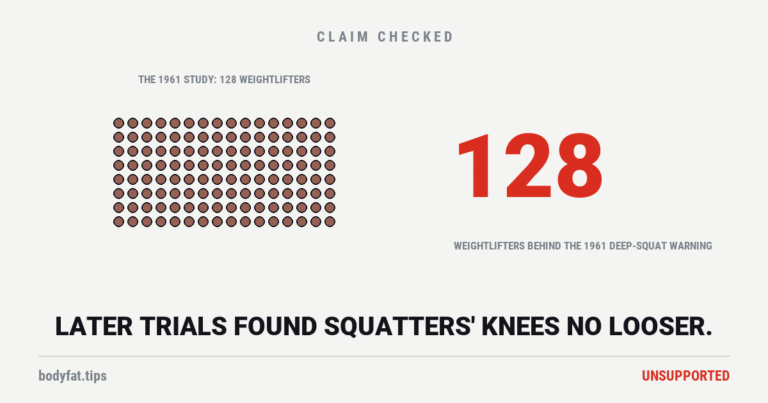
Cartoon grid of 128 dots, the weightlifters measured in the 1961 study the deep-squat warning is usually traced to; beside it the figure 128

The deep-squat warning is usually traced to a 1961 study of 128 weightlifters. Trials since found squatters' knees no looser, and among 2,607 adults those who had strength trained had less knee arthritis; one trial pointed the other way. Hours of kneeling or squatting at work are a different matter. Most of the nine benefits of twenty squats a day rest on studies of something else.
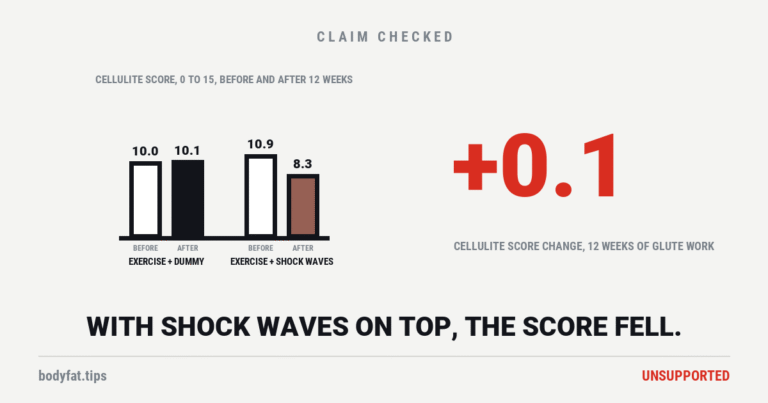
+0.1points of change on a 0-15 cellulite scale after 12 weeks of daily glute exercises (10.0 to 10.1); the women given real shock-wave treatment on top improved by 2.53 pointsNOUnsupported

How to Get Rid of Cellulite: Twelve Weeks of Daily Glute Exercises Left It Where It Was. Nothing Tested So Far Melts It.

Cartoon bar chart on a 0 to 15 cellulite scale, before and after twelve weeks of daily glute exercises: with a dummy treatment 10.0 then 10.1; with real shock waves on top 10.9 then 8.3; beside it the figure +0.1

In a randomised trial, twelve weeks of daily glute exercises left cellulite scores where they started. In a small five-month trial, a diet with 40% of its calories from carbohydrate, a modest cut rather than a true low-carb diet, improved neither weight nor cellulite. The treatments that helped, an injection and some devices, helped modestly, mostly in trials their makers paid for.

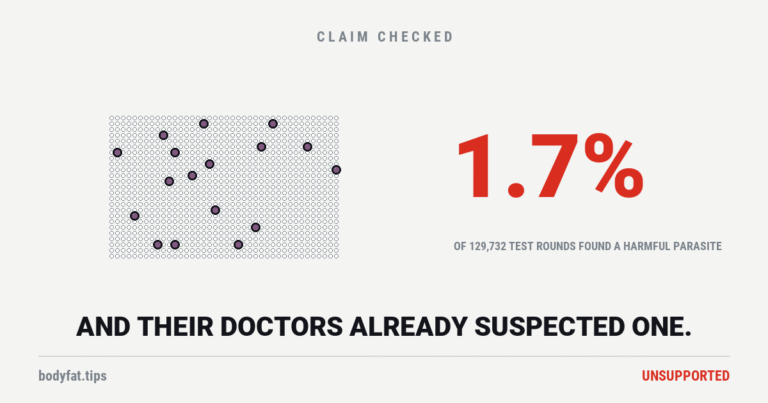
1.7%of 129,732 rounds of parasite testing doctors ordered found a parasite that causes disease (a national US laboratory, 1997 to 2006)NOUnsupported

Do Parasite Cleanses Work? One Seller Told Buyers 90% of Americans Have Parasites. In 129,732 Rounds of Lab Tests Doctors Ordered, 1.7% Found One That Causes Disease.

Cartoon dot grid: 1,000 dots with 17 filled; beside it the figure 1.7%, the share of 129,732 rounds of parasite testing at a US laboratory that found a disease-causing parasite

A seller told buyers that 90% of Americans have parasites. In 129,732 rounds of parasite testing doctors ordered at a national laboratory, 1.7% found one that causes disease. We found no trial of a cleanse in people without an infection; herbs tried on people who had one gave mixed results, and against the drug they mostly lost.

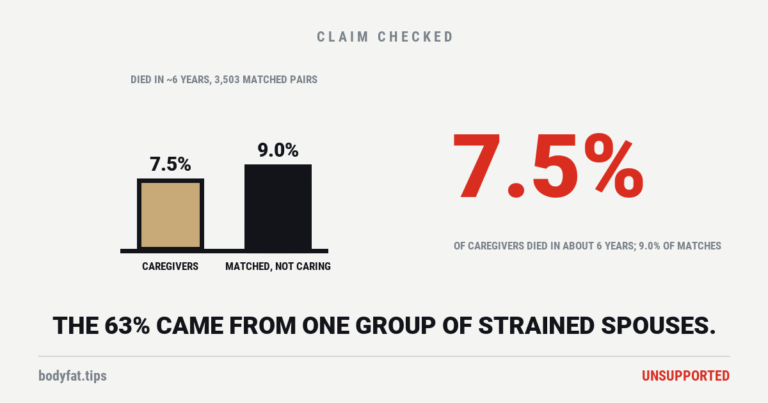
7.5%of caregivers died over about six years; 9.0% of matched non-caregiversNOUnsupported

Does Caregiving Shorten Your Life? The 63% Came From Strained Spouses. The Big Studies Since Found Caregivers Dying Less Often.

Cartoon bar chart: a bar at 7.5 percent marked caregivers and a taller bar at 9.0 percent marked matched non-caregivers; beside the figure 7.5%

A widely watched caregiving channel says stress keeps caregivers' cortisol high, and another of its videos puts their extra risk of dying at 63%. That figure came from strained spouses in one 1999 study. In the large studies since, caregivers died less often than similar non-caregivers. What rises, consistently, is depression and stress.

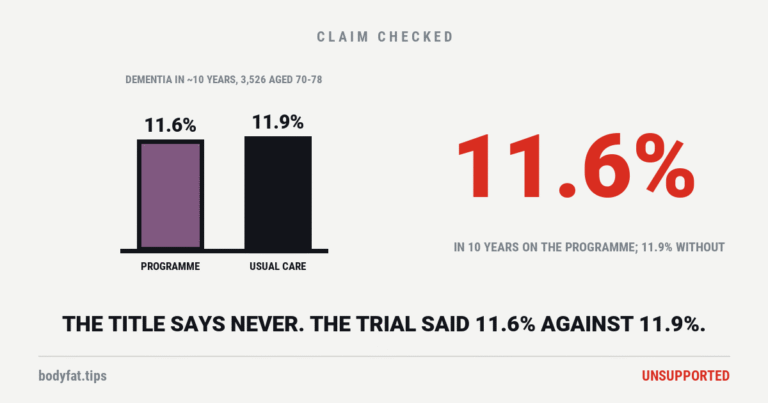
11.6%got dementia within ten years on a habit programme; 11.9% without itNOUnsupported

How to Prevent Dementia: The “Never” Habit Is Untested; Habit Trials Fell Short

Cartoon bar chart: two almost equal bars, 11.6 percent marked programme and 11.9 percent marked usual care; beside the figure 11.6%

A video watched 4.3 million times says people who never get dementia share a morning habit. In a ten-year Dutch trial of a habit programme, 11.6% got dementia against 11.9% without it. The programmes lift test scores a little; the clearest cut in diagnoses came from treating high blood pressure.

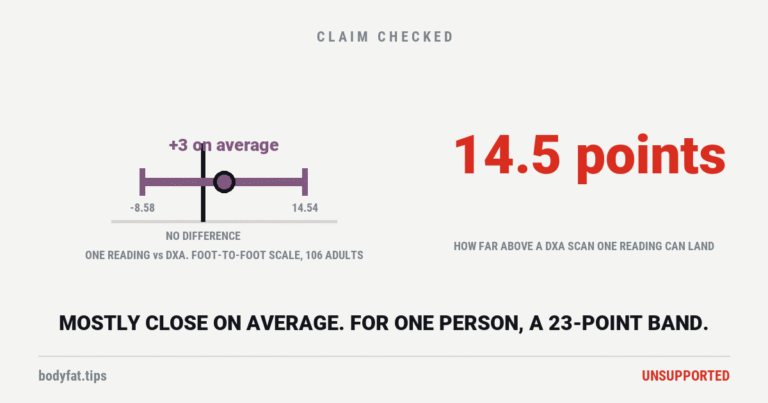
14.5 pointshow far above a DXA scan one reading can land, on the worst of three bathroom scales in a 2008 testNOUnsupported

Are Body Fat Scales Accurate? One Reading Can Be 14.5 Points Off

Cartoon interval bar swallowing the zero line, beside the figure 14.5 points

The number on the display has a decimal place. In the best direct test, one reading from the worst of three bathroom scales fits a DXA value anywhere across a 23-point span, and even the best scale's band was about 13 points wide.