BodyFat.Tips Desk

BodyFat.Tips Desk

The BodyFat.Tips Desk is the research and editorial operation behind BodyFat.Tips, a publication of TAK Marketing, LLC, part of the Omnishun information systems. It is a desk, not a person: no headshot, no invented bio, no borrowed credentials. Every verdict here is produced by reading the primary research rather than the press release, rating how strong the evidence actually is on a fixed four-point scale, tracing where the claim came from, and correcting in public when we get something wrong. Nobody pays us to reach a conclusion. This is journalism, not medical advice — take personal health questions to a clinician. How we work, in detail: bodyfat.tips/how-we-read-a-study/
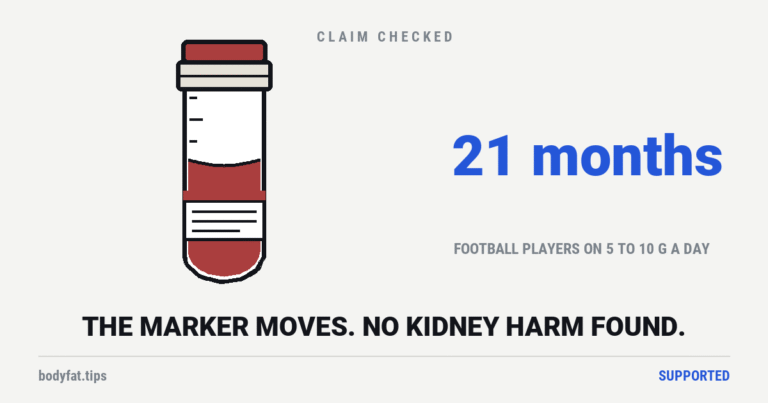
21 monthscollege football players, 5 to 10 g a day: no kidney harm foundMOSTLYSupported

Is Creatine Safe? Yes — And the Blood Test Explains the Panic

Cartoon blood collection tube, part filled, beside the words 21 months

Studied at up to 30 g a day for five years, in groups from infants to the elderly. The kidney scare has a real source: creatine raises serum creatinine, the marker doctors read as kidney function — while the kidneys' actual filtration rate stays put. The gauge moved, not the engine.

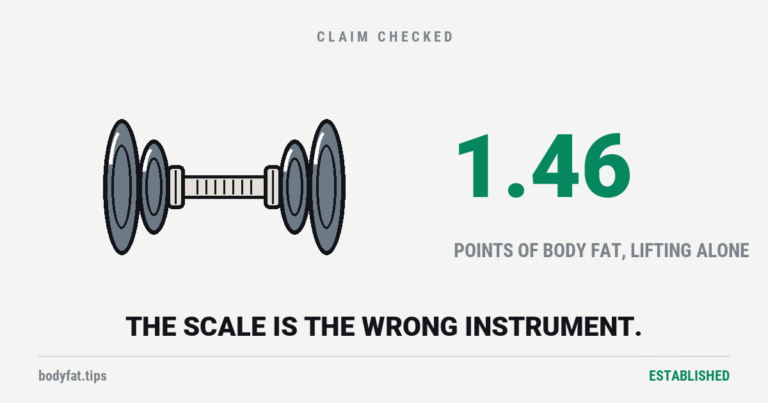
1.46points of body fat, lifting aloneYESEstablished

Does Lifting Weights Burn Fat? Yes — Your Scale Can’t See It

Cartoon loaded dumbbell beside the figure 1.46

54 randomised trials, resistance training against people doing no exercise at all, nobody dieting: body fat percentage fell 1.46 points (1.08 in the trials that used DXA scans) and fat mass about 1.2 lb. The percentage moved further than the fat did, probably because muscle was going on, and a bathroom scale adds the two together.

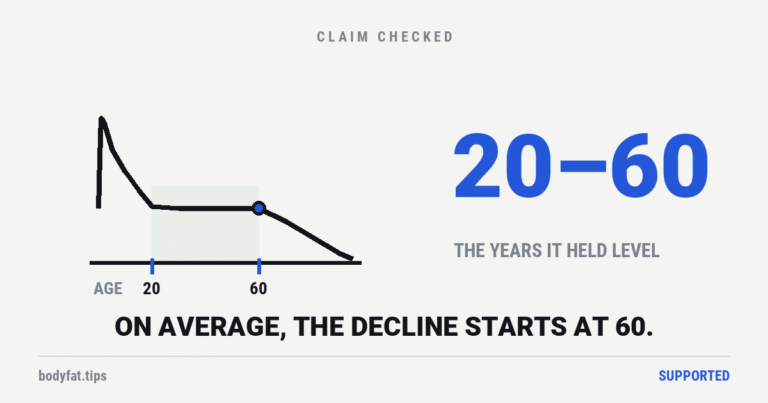
20–60the ages it held level, on averageMOSTLYSupported

Does Metabolism Slow With Age? Yes — at 60, Not 30

Line chart of energy expenditure across the lifespan: a peak in infancy, flat from age 20 to 60, then declining

6,421 people across 29 countries, measured by doubly labelled water: energy expenditure is flat from 20 to 60, even during pregnancy. It falls about 0.7% a year after that. The decline is real — it just starts four decades later than everyone thinks.