BodyFat.Tips Desk

BodyFat.Tips Desk

The BodyFat.Tips Desk is the research and editorial operation behind BodyFat.Tips, a publication of TAK Marketing, LLC, part of the Omnishun information systems. It is a desk, not a person: no headshot, no invented bio, no borrowed credentials. Every verdict here is produced by reading the primary research rather than the press release, rating how strong the evidence actually is on a fixed four-point scale, tracing where the claim came from, and correcting in public when we get something wrong. Nobody pays us to reach a conclusion. This is journalism, not medical advice — take personal health questions to a clinician. How we work, in detail: bodyfat.tips/how-we-read-a-study/
3independent cohorts found the blood link, none measuring intakeMAYBEPreliminary

Is Erythritol Bad For You? A Sweetener Worth Watching
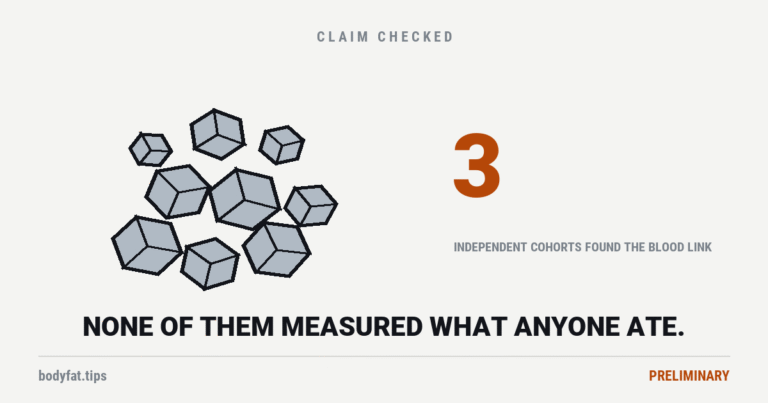
A cartoon heap of coarse sweetener crystals, beside the figure 3

The 2023 study linking erythritol to heart attacks came with a real mechanism — more reactive platelets, more clotting in animals. But the cohorts measured erythritol in blood, not diet, and your body makes its own: plasma levels track metabolic disease and fall after weight loss. Marker or cause is genuinely unresolved.
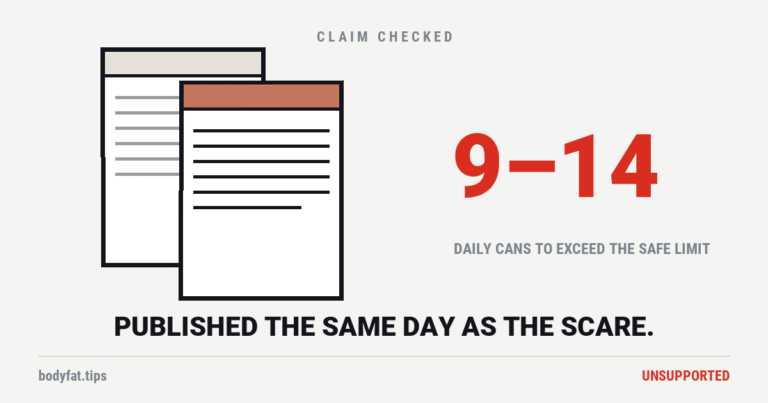
9–14cans a day before a 154 lb adult passes the limit in WHO's release, counting nothing elseNOUnsupported

Is Aspartame Bad For You? Two WHO Reports, One Headline

Two cartoon reports overlapping, one behind the other, beside the figure 9 to 14

On the same day in July 2023, IARC called aspartame 'possibly carcinogenic' — a hazard statement, third of four levels — and JECFA reaffirmed the safe daily intake, noting a 70 kg adult would need 9–14 cans of diet drink a day to exceed it. The press ran the first report. WHO's own nutrition director said safety is not a major concern at normal doses.

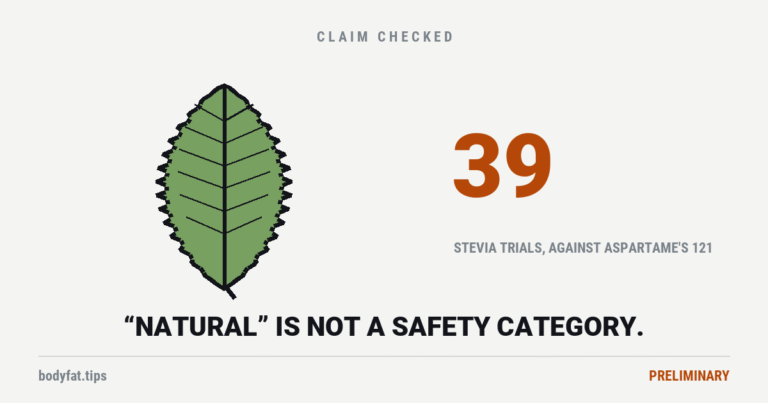
39stevia trials, against aspartame's 121MAYBEPreliminary

Is Stevia Bad For You? “Natural” Is Not a Safety Category

Cartoon serrated stevia leaf on a stem, beside the figure 39

The WHO guideline covers 'all synthetic and naturally occurring' sweeteners and names stevia in the same list as aspartame — natural is written out as an exemption on purpose. And stevia has about a third the randomised trial evidence of aspartame, so the confidence people feel about it is not coming from a deeper evidence base.

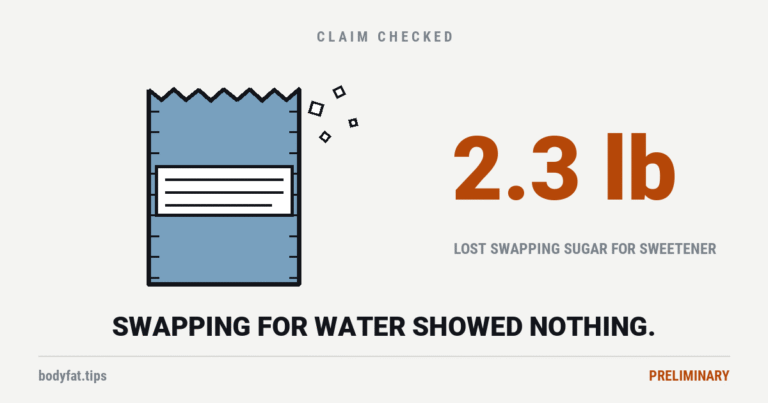
2.3 lblost swapping sugary drinks for sweetened, 12 trialsMAYBEPreliminary

Are Artificial Sweeteners Bad For You? The WHO Hedged — Here’s Why

Cartoon sweetener sachet torn open at the top with grains spilling out, beside the figure 2.3 pounds

The WHO advises against non-sugar sweeteners — as a conditional recommendation, on evidence it grades low certainty, from a harm signal that is observational, in a document that names reverse causation itself. Meanwhile 17 randomised trials found swapping sugary drinks for sweetened ones took off 2.3 lb, while swapping for water did nothing.

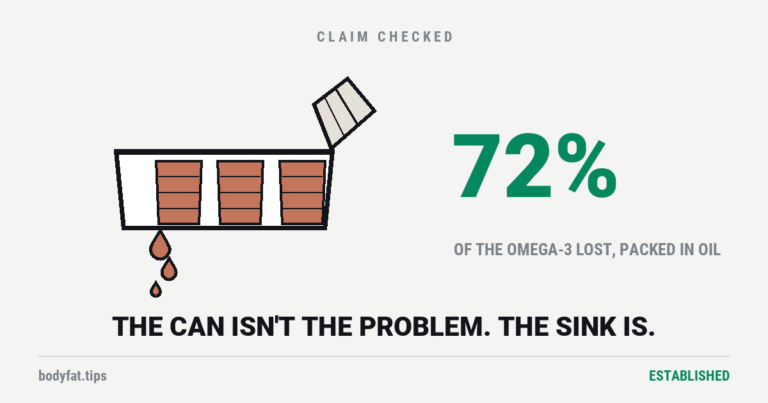
72%less omega-3 in USDA's oil-packed albacore entry than in its water-packed oneYESEstablished

Is Canned Tuna Healthy? Yes — But You’re Probably Draining the Best Part

Cartoon fish tin with the lid rolled back and drops falling from it, beside the figure 72 percent

Canning doesn't destroy the omega-3s — canned pink salmon carries more than a gram per 100 g. But albacore packed in oil holds 0.24 g against 0.86 g for the same fish in water, because the fat dissolves into the oil and the oil goes down the sink. Figures pulled from USDA FoodData Central, with the FDA/EPA mercury lists alongside.

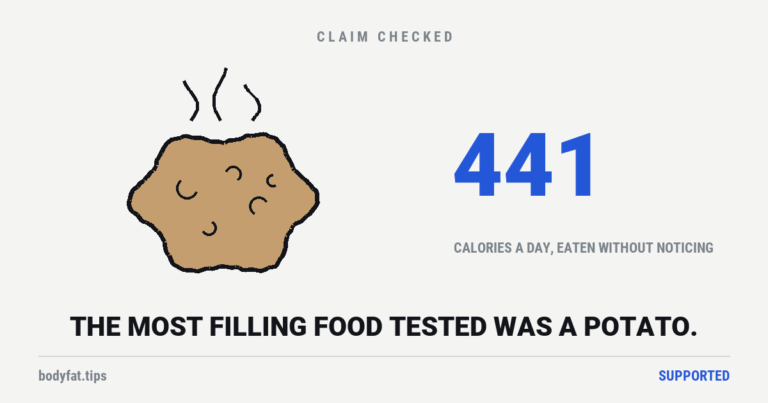
441calories a day, eaten without noticing, by 19 adults — 16 of them womenMOSTLYSupported

Does Protein Keep You Full? Yes — But a Potato Beat Everything

Cartoon boiled potato with steam rising, beside the figure 441

Nineteen people ate 441 calories a day less without being told to, purely from moving protein from 15% to 30% of their meals — with the appetite hormones pushing the other way. But when 38 foods were ranked head to head, the most filling was a boiled potato, and water content predicted fullness better than protein did.

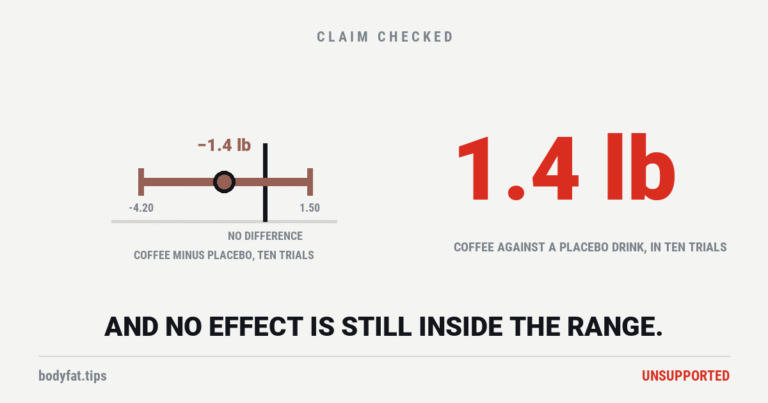
1.4 lbcoffee against a placebo drink, and no effect is inside the rangeNOUnsupported

Does Coffee Help You Lose Weight? Ten Trials Poured Real Coffee. No.

Cartoon interval bar straddling a zero line, running from 4.2 pounds lost to 1.5 pounds gained, beside the figure 1.4 lb

13 trials, 606 people, and a real dose-response — but an I-squared of 94%, meaning the trials flatly disagree, and no figure you could act on. Meanwhile the famous green coffee claim of 17.7 lb 'with or without diet and exercise' came from a study whose weights were altered. It cost $3.5 million and was retracted.