BodyFat.Tips Desk

BodyFat.Tips Desk

The BodyFat.Tips Desk is the research and editorial operation behind BodyFat.Tips, a publication of TAK Marketing, LLC, part of the Omnishun information systems. It is a desk, not a person: no headshot, no invented bio, no borrowed credentials. Every verdict here is produced by reading the primary research rather than the press release, rating how strong the evidence actually is on a fixed four-point scale, tracing where the claim came from, and correcting in public when we get something wrong. Nobody pays us to reach a conclusion. This is journalism, not medical advice — take personal health questions to a clinician. How we work, in detail: bodyfat.tips/how-we-read-a-study/
18%higher colorectal cancer risk per 50 g of processed meat a dayMOSTLYSupported

Is Red Meat Bad For You? Processed Meat Is The Real Answer
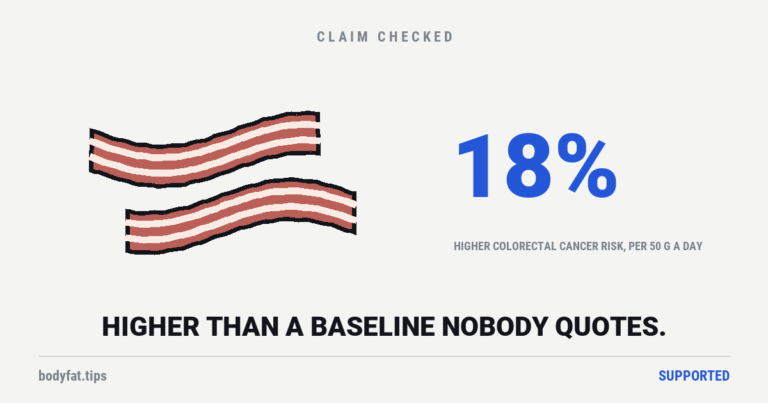
Two cartoon rashers of bacon, beside the figure 18 percent

Processed meat goes with an 18% higher colorectal cancer risk per 1.8 oz (50 g) a day. Two 2019 reviews measured a smaller cut, three servings a week, and found about 1 fewer case per 1,000 people over a lifetime. Both are true. Here is why, what IARC's Group 1 actually means, and why steak is a weaker case.
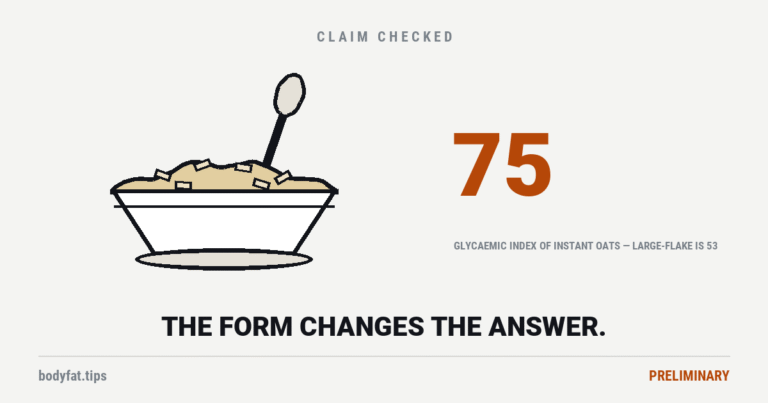
75glycaemic index of instant oatmeal — large-flake is 53MAYBEPreliminary

Is Oatmeal Good For Weight Loss? Maybe a Little. It Does Lower Cholesterol.

A cartoon bowl of porridge with a spoon, beside the figure 75

Pooled across 72 measurements, instant oatmeal scored 75 on the glycaemic index and large-flake oats 53. Regulators have signed off on oats for cholesterol, at 3 g of beta-glucan a day, not for weight. On weight, pooled trials of beta-glucan from oats and barley found about 2 lb at best, and the newest, in overweight adults, found none.

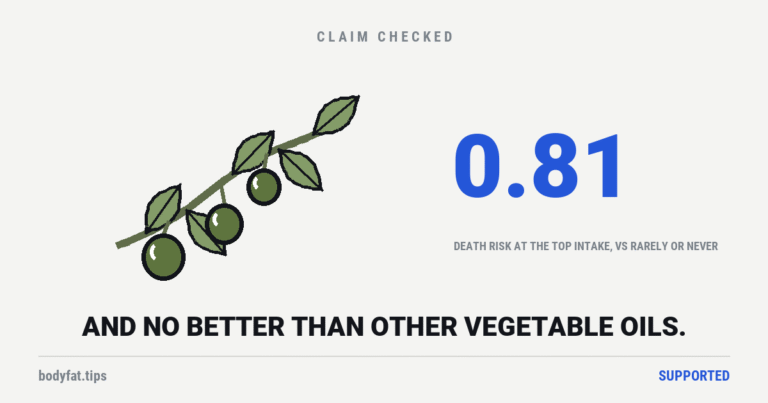
0.81risk of death at the highest intake, versus noneMOSTLYSupported

Is Olive Oil Good For You? Yes — But Not Compared To The Oils You’ve Been Told To Fear

A cartoon olive sprig with leaves and three olives, beside the figure 0.81

The famous PREDIMED trial was retracted from the New England Journal of Medicine and republished — and the nuts arm did just as well as the olive oil arm. Across 92,000 Americans over 28 years, swapping butter or margarine for olive oil went with lower death rates. Against other vegetable oils combined, no significant difference at all.

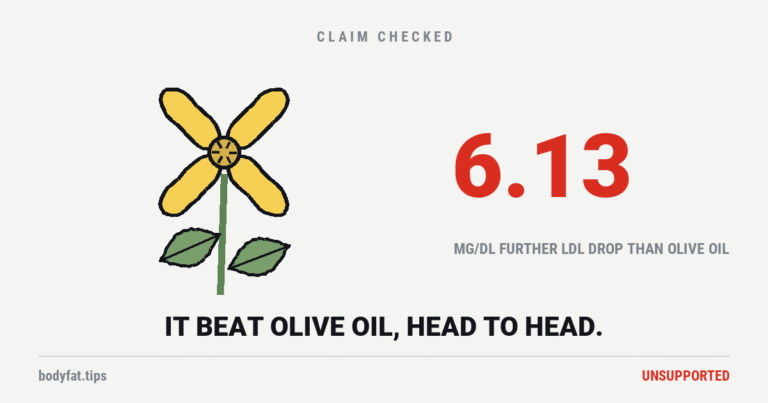
6.13mg/dL further LDL drop than olive oilNOUnsupported

Is Canola Oil Bad For You? The Thing It’s Accused Of Was Bred Out Fifty Years Ago

A cartoon four-petalled canola flower on a stem, beside the figure 6.13

Canola is rapeseed bred low in erucic acid — the name literally means Canadian oil, low acid. The FDA ban people cite was against mustard oil, not this. Erucic acid does fatten animal hearts at high doses, which is why it was bred down to trace levels and is capped by law. And in 13 head-to-head trials, canola lowered LDL more than olive oil did.

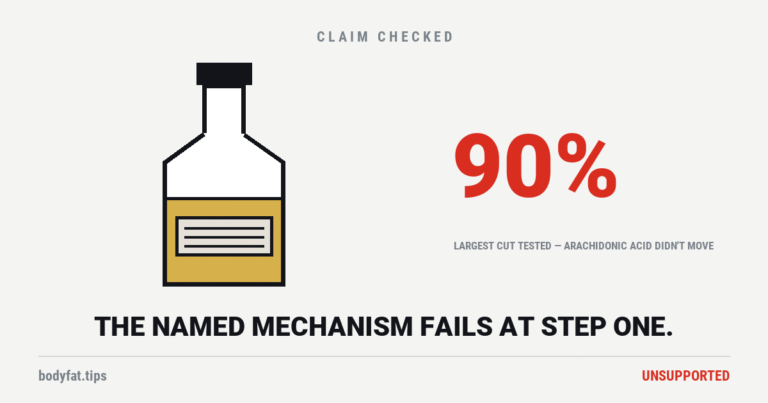
90%cut from the diet — arachidonic acid didn't moveNOUnsupported

Are Seed Oils Bad For You? Both Sides Are Quoting Half The Evidence

A cartoon bottle of cooking oil, part filled, beside the figure 90 percent

Cut dietary linoleic acid by up to 90% and arachidonic acid in the blood doesn't move — the arachidonic acid route to inflammation fails at step one. But two recovered BMJ trials found no mortality benefit, and in one, more men died on the oil. Here is the whole file, including what's wrong with both halves.

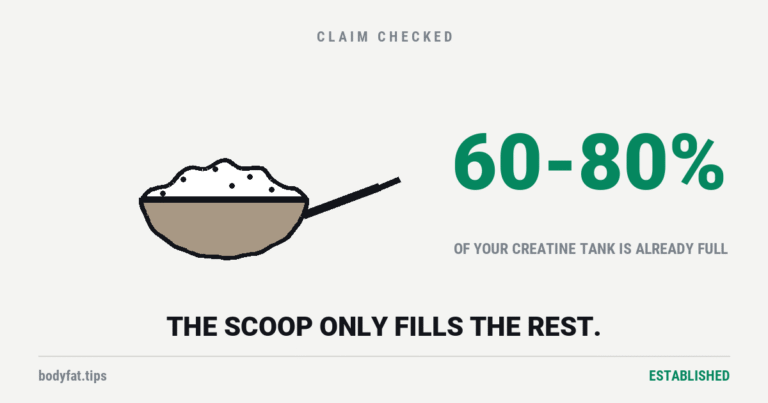
60-80%of your creatine tank is already fullYESEstablished

How Much Creatine Should You Take? 3 To 5 Grams — And You’re Already Most Of The Way There

A cartoon measuring scoop heaped with powder, beside the figure 60 to 80 percent

On an ordinary diet your muscle creatine is already 60–80% saturated, and supplementing fills the rest. Which is why, in one biopsy study given the same dose per kilogram, the group that gained most gained nearly six times the group that gained least — they started with the most room. Loading only changes how fast you arrive.

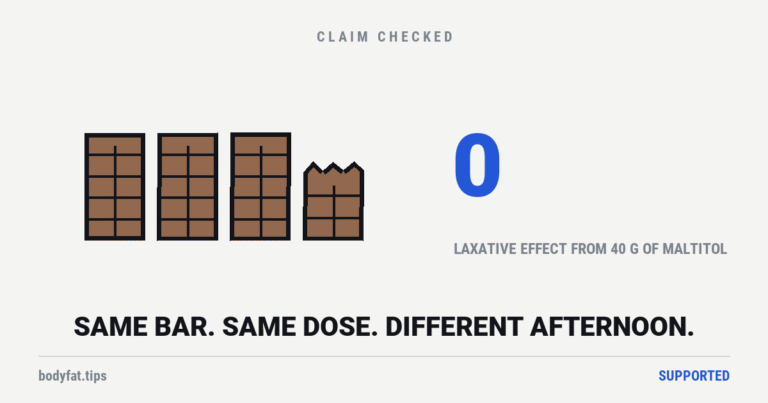
0laxative effect from 40 g of maltitolMOSTLYSupported

Are Sugar Alcohols Bad For You? The Real Problem Is Digestive

Four cartoon chocolate bars, the last one snapped short, beside the figure zero

Same trial, same 59 people, same 40-gram dose: lactitol caused severe symptoms across the board and maltitol caused no laxative effect at all. Both are labelled sugar alcohols. Europe's regulator set a limit on erythritol for diarrhoea — not clots — and refused to drop the warning label. And the erythritol and xylitol heart scares came from one dataset.