18%smaller blood-sugar rise after chilled, reheated rice in 14 healthy adults, the trial the video cites first; the peak was no lowerMAYBEPreliminary

Resistant Starch: Chilled Rice Cut the Blood-Sugar Rise 18% in the Study a 3-Million-View Video Cites. A 40-Person Rice Trial Found No Difference.
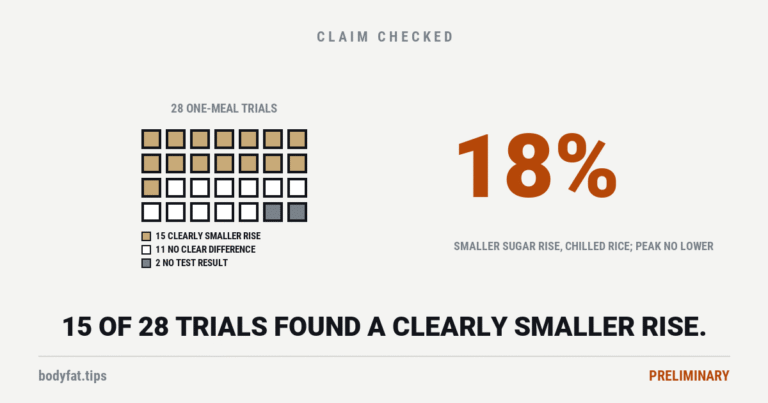
Cartoon grid of 28 boxes, one per one-meal trial of cooled against fresh starchy food: 15 filled for a clearly smaller blood-sugar rise, 11 open for no clear difference and 2 grey for no test result; beside it the figure 18%, the drop after chilled, reheated rice in 14 healthy adults

Cooling cooked rice, pasta or potatoes turns a little of the starch resistant to digestion. Of the 28 single-meal trials we found and could read in people without diabetes, 15 found a clearly smaller blood-sugar rise, 11 found no clear difference and 2 reported no test result for it. The peak often barely moved, and no trial of chilled food alone that measured blood sugar lasted longer than a day. Resistant-starch supplements are a separate, weaker story.
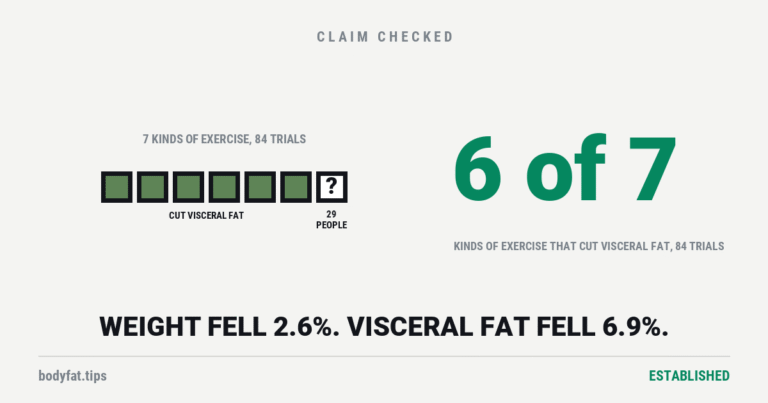
6 of 7kinds of exercise that cut visceral fat in a review of 84 randomised trials; the seventh had 29 people and could not tellYESEstablished

How to Lose Visceral Fat: Exercise Shrank It in Trial After Trial, Often by More Than the Scale Showed. The Green Tea Evidence Comes Mostly From Its Makers.

Cartoon of seven boxes in a row: six filled, marked cut visceral fat, and a seventh empty with a question mark, marked 29 people; seven kinds of exercise in a review of 84 randomised trials; beside it the figure 6 of 7

Six of seven kinds of exercise cut visceral fat across 84 randomised trials, and in one eight-month trial it fell 6.9% while weight fell 2.6%. The green tea sold to shrink it was tested mostly by companies that sell tea. Of three trials we read with no company among their authors, two found no change and one, a small trial alongside exercise, found less.

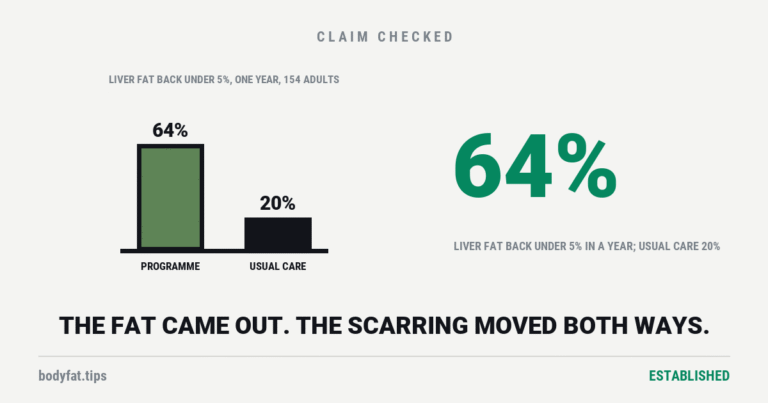
64%had liver fat back under 5% after a year-long lifestyle programme, against 20% on usual careYESEstablished

Can Fatty Liver Be Reversed? The Fat, Yes, Within Weeks. In a Year-Long Study, the Scarring Moved Both Ways.

Cartoon bar chart: a bar at 64 percent marked programme and a shorter bar at 20 percent marked usual care, the share with liver fat back under 5% after a year; beside the figure 64%

Yes, for the fat: in a year-long randomised trial, 64% of people on a lifestyle programme had liver fat back under the line that defines the disease, against 20% on usual care, and liver fat starts falling within days of eating less. The scarring, which is what predicts how the disease ends, is a slower and smaller story.

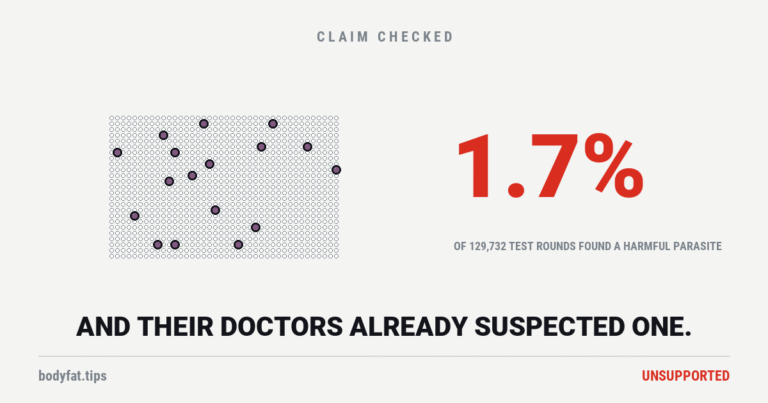
1.7%of 129,732 rounds of parasite testing doctors ordered found a parasite that causes disease (a national US laboratory, 1997 to 2006)NOUnsupported

Do Parasite Cleanses Work? One Seller Told Buyers 90% of Americans Have Parasites. In 129,732 Rounds of Lab Tests Doctors Ordered, 1.7% Found One That Causes Disease.

Cartoon dot grid: 1,000 dots with 17 filled; beside it the figure 1.7%, the share of 129,732 rounds of parasite testing at a US laboratory that found a disease-causing parasite

A seller told buyers that 90% of Americans have parasites. In 129,732 rounds of parasite testing doctors ordered at a national laboratory, 1.7% found one that causes disease. We found no trial of a cleanse in people without an infection; herbs tried on people who had one gave mixed results, and against the drug they mostly lost.

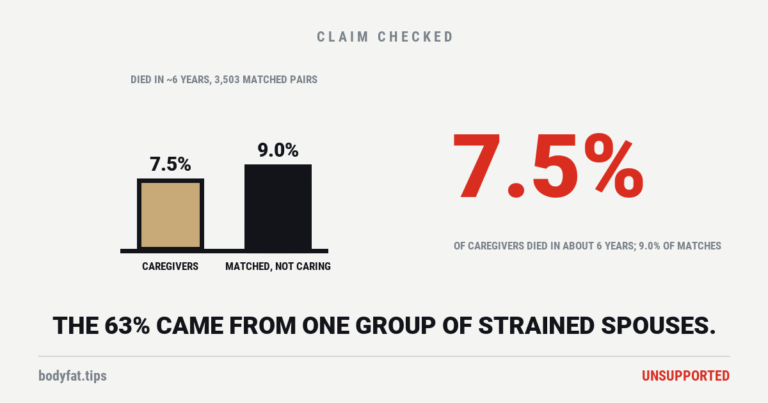
7.5%of caregivers died over about six years; 9.0% of matched non-caregiversNOUnsupported

Does Caregiving Shorten Your Life? The 63% Came From Strained Spouses. The Big Studies Since Found Caregivers Dying Less Often.

Cartoon bar chart: a bar at 7.5 percent marked caregivers and a taller bar at 9.0 percent marked matched non-caregivers; beside the figure 7.5%

A widely watched caregiving channel says stress keeps caregivers' cortisol high, and another of its videos puts their extra risk of dying at 63%. That figure came from strained spouses in one 1999 study. In the large studies since, caregivers died less often than similar non-caregivers. What rises, consistently, is depression and stress.

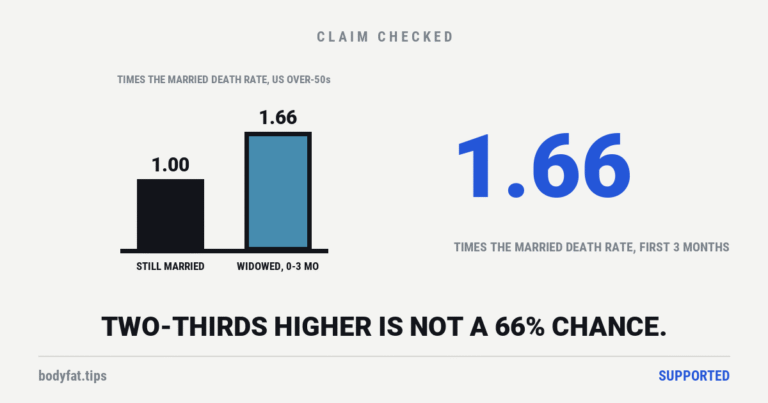
1.66times the married death rate in the first 3 months after a spouse died (US, over-50s); not clearly raised from 3 to 12 monthsMOSTLYSupported

Can You Die of a Broken Heart? After a Spouse Dies, the Survivor’s Death Rate Runs About Two-Thirds Higher for Three Months. Then the Excess Shrinks.

Cartoon bar chart: a bar at 1.00 marked still married and a taller bar at 1.66 marked widowed, first three months; beside the figure 1.66

After a spouse dies, the survivor's death rate ran about two-thirds higher for three months: against the still-married in an American study, and against people's own usual rate in a British one. Then the excess shrank, and in plain numbers it is small. Broken heart syndrome is real; when a painful emotion set it off, grief among them, about 1 in 100 patients died in hospital.

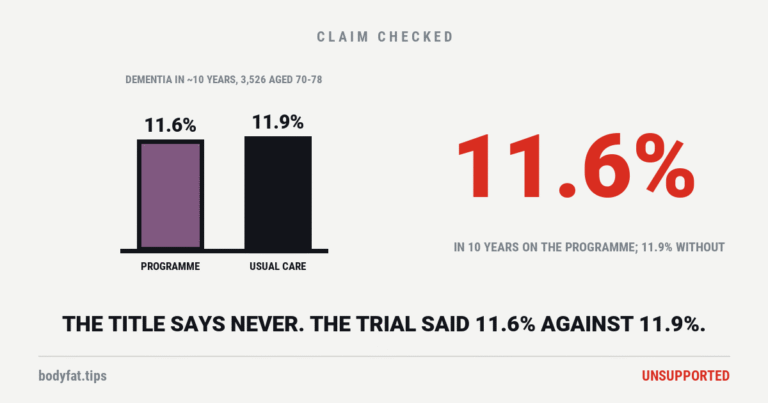
11.6%got dementia within ten years on a habit programme; 11.9% without itNOUnsupported

How to Prevent Dementia: The “Never” Habit Is Untested; Habit Trials Fell Short

Cartoon bar chart: two almost equal bars, 11.6 percent marked programme and 11.9 percent marked usual care; beside the figure 11.6%

A video watched 4.3 million times says people who never get dementia share a morning habit. In a ten-year Dutch trial of a habit programme, 11.6% got dementia against 11.9% without it. The programmes lift test scores a little; the clearest cut in diagnoses came from treating high blood pressure.

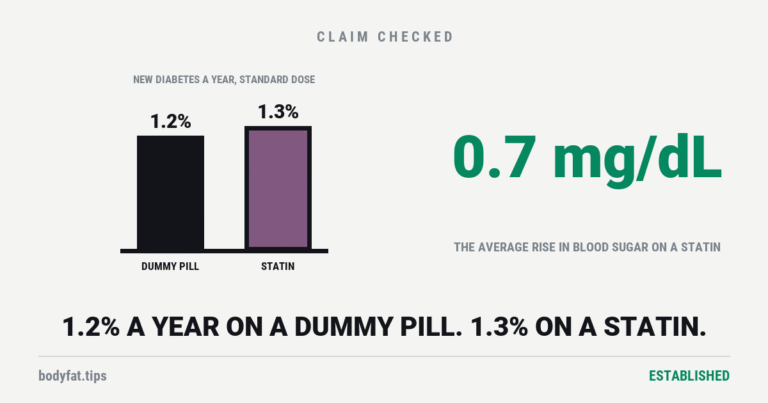
0.7 mg/dLaverage rise in blood sugar on a statin across nine blinded trials (0.04 mmol/L)YESEstablished

Do Statins Raise Blood Sugar? Yes, by About 0.7 mg/dL. On a Standard Dose, That Is About One Extra Diabetes Diagnosis per 1,000 People a Year.

Cartoon bar chart: two almost equal bars, 1.2 percent a year marked dummy pill and 1.3 percent marked statin, new diabetes diagnoses; beside the figure 0.7 mg/dL

Statins do raise blood sugar: by about 0.7 mg/dL on average in the blinded trials that measured it, enough to add roughly one diabetes diagnosis per 1,000 people a year on a standard dose, most of them in people already close to the line. Here is that number beside the heart attacks and strokes statins prevent, measured in the same people where trials counted both, and who sits where.

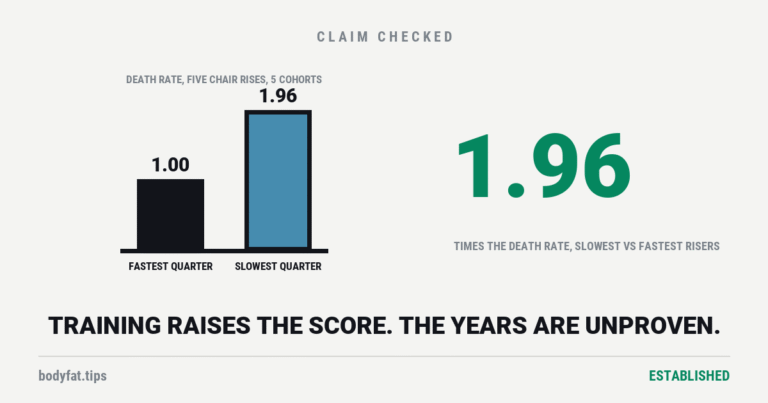
1.96times the death rate, slowest vs fastest quarter at five chair risesYESEstablished

Sit-to-Stand Test: In Older Adults, the Slowest Risers Died at Nearly Twice the Rate. Whether Raising Your Score Buys Years Is Unproven.

Cartoon bar chart from one baseline: a bar at 1.00 marked fastest quarter and a bar nearly twice as tall at 1.96 marked slowest quarter, five chair rises; beside the figure 1.96

In five cohorts of people averaging over 70, the slowest quarter at getting out of a chair died at 1.96 times the rate of the fastest. Year-long exercise trials raise the score a little and cut falls; deaths came out 5.5% with exercise against 5.8% without.

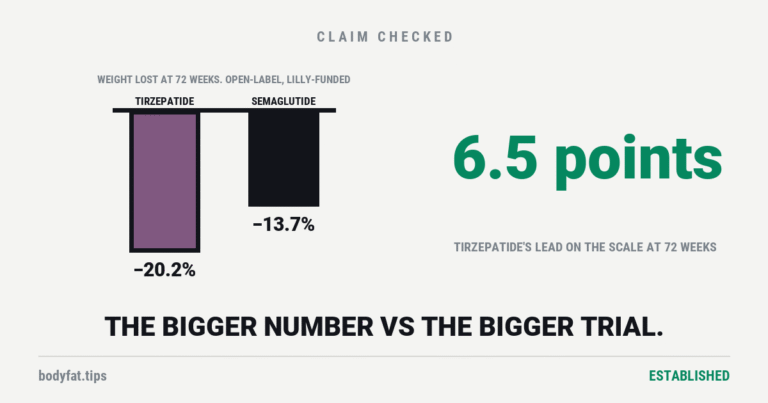
6.5 pointstirzepatide's lead over semaglutide on the scale at 72 weeksYESEstablished

Tirzepatide vs Semaglutide: Tirzepatide Lost 20.2% to Semaglutide’s 13.7% in the Only Head-to-Head Obesity Trial. Only Semaglutide Has Beaten Placebo on Heart Outcomes.

Cartoon bar chart from one zero line: a bar dropping to minus 20.2 percent marked tirzepatide beside a shorter bar dropping to minus 13.7 percent marked semaglutide; beside the figure 6.5 points

Tirzepatide has the bigger number: 20.2% against 13.7%, in one open-label, Lilly-funded trial. Semaglutide has the bigger trial: 17,604 people and a fifth fewer heart attacks and strokes. Which matters depends on what you are trying to lose.