Start with the part that is real, because it matters more than the rest of this page.
Lymphedema is a genuine and often disabling medical condition. More than one in five people treated for breast cancer develop it, when surgery or radiation damages the vessels that move fluid out of a limb. [1] The arm swells, and it does not go down on its own.
Manual lymphatic drainage is a real hospital therapy, delivered by trained physiotherapists, for those people. It is not a spa invention, though beauty was on its label by 1965, when one of the two Danes who developed it in 1936 [30] titled a paper on it, in PubMed’s English, “a new type of chirotherapy”, or hand treatment, “for esthetic prophylactic and curative purposes” [4]. If you have lymphedema and a clinician has you doing this, nothing on this page is an argument for stopping.
What follows is about the other version: the one sold for puffiness, bloating and a slimmer face, to people whose lymphatic systems are working perfectly well.
The number that reframes everything
The Cochrane review is the place to start. Its search closed in May 2013, and it contains one comparison worth knowing by heart [1].
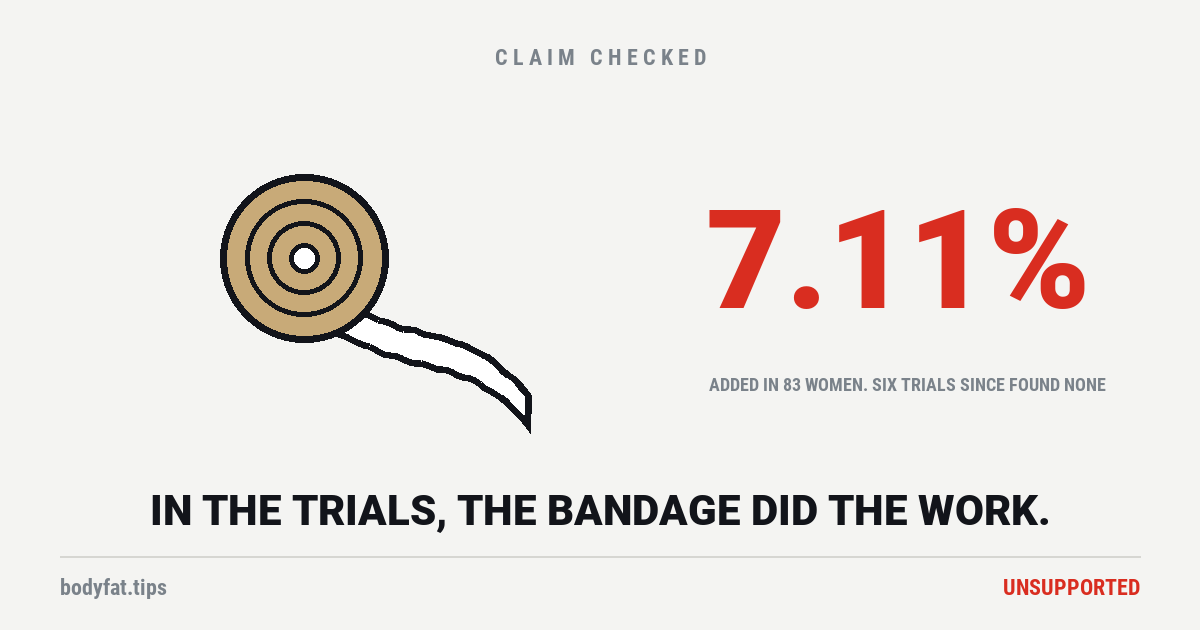
In two of its six trials, 83 women with lymphedema got compression bandaging, and about half of them got the massage as well. With the bandaging alone, swelling fell by 30% to 38.6%. Bandaging plus manual lymphatic drainage took off a further 7.11%. [1]
Read that split again. The bandage is doing almost all of the work. The hands are an add-on worth about a fifth as much — in the population where this therapy is actually indicated, delivered by professionals.
And the glamour is distributed in exactly the opposite proportion. Of the twenty videos in our saved sample for the term, drawn on 21 August 2026, none mentions a bandage in its title, its tags or its description.
Even that fifth is the high-water mark. One of the two trials assigned women by alternation, not by chance, and the review’s own authors list three explanations for the 7.11%: “Chance, bias, or a true finding” [1]. Since its search closed, at least seven randomised trials have tested the massage against the same treatment without it in people with lymphedema after breast cancer. Six, of 66, 60, 77, 54, 194 and 60 people, found that it did not shrink the arm more [5][6][7][8][9][10], though one found less heaviness and discomfort with it [8]. The largest, at five Belgian hospitals, gave patients the real massage, in two versions, or a placebo massage, with the patients and the people measuring kept blind: the swelling fell by 20.9% with the usual massage, 23.3% with a version guided by imaging and 24.8% with the placebo [9]. A 2024 review of 13 earlier reviews concluded that the massage “did not provide further volume reduction” [12]. The seventh points the other way: in 28 women already past the first, intensive weeks of treatment, a month without the massage left one of four arm measurements slightly larger and the arm feeling heavier [11].
Three reviews, one pile of trials
Three systematic reviews have pooled trials of the massage, and on a first read they disagree. Check what each one actually pooled, and most of the disagreement goes away.
Three reviews of the same therapy, and what each result rests on
Review
Size
On swelling
Cochrane, 2015
2 trials, 83 women
adds 7.11% on top of compression (search to May 2013)
2020
8 trials, 338 women
no significant reduction
2022
7 trials, 370 women
no change in volume; less pain in 3 trials, 173 women
The Cochrane review studied women with diagnosed lymphedema. The two later reviews also
pooled trials of prevention in women who did not yet have it, and 1,000 of each review’s
patients come from one of them, in which women massaged their own surgical scars [2][3][15].
None of the three included a trial in healthy people.
The 2020 review’s “no significant reduction” pooled 8 trials and 338 women; six of the eight trials are the Cochrane review’s own [2]. Its headline count of 17 trials and 1,911 patients enters one Belgian trial twice, as two studies, and 1,431 of those patients were in trials of prevention, not treatment [2]. The 2022 review found no change in limb volume (7 trials, 370 women) or quality of life, and less pain in 3 trials and 173 women; the largest of the three found no difference in pain, and leaving out either of the other two makes the pain result no longer statistically significant, meaning no longer clearly more than chance could produce [3].
Both later reviews also asked whether the massage prevents lymphedema after surgery, and both answered from the same three trials, of 41, 160 and 1,000 women [2][3]. The 2020 review entered the Belgian trial of 160 twice and found no significant prevention. The 2022 review counted the Chinese trial of 1,000 four times, once for each follow-up visit, reached a total of 4,513 “participants” in a review of 1,564 people, and found fewer cases overall, though at no single visit was its pooled result statistically significant [3]. In the trial of 1,000, women massaged their own surgical scars, and the 2022 review rated its measurement at high risk of bias [15][3]. The Belgian trial, with concealed allocation and blinded measurement, found no difference at one year or at five [13][14].
So the reviews do not really disagree about the swelling: against compression alone, only the 2015 review found the massage added anything, on one of its three measures, in 83 women. They differ about pain, on thin evidence, and about prevention, because of how they counted the same trials. We are not going to average those into a single comforting sentence. That is what the evidence looks like, and a reader deserves to see how it was assembled rather than a blend of it.
A subgroup result worth learning to distrust
That 2020 review found nothing overall — and then reported a large effect in patients under 60.
This is worth a moment, because you will see this move everywhere once you know it. When the main result is nothing, researchers often slice the data by age, sex, severity, country, duration. Slice it enough ways and something will look impressive by chance alone, the same way that flipping enough coins guarantees somebody gets six heads.
A big effect in a subgroup, pulled out of a study that found nothing overall, is not a discovery. It is a question for the next trial. The authors say as much: larger well-designed trials are needed. [2] Here the under-60 subgroup is just two trials [2]. By our reading of the review’s chart, one of them is a Danish trial of 42 women in which, by the Cochrane review’s account, the two groups did not differ [1].
60% to 80%, whichever treatment
In the conclusions of the Cochrane review’s summary is a sentence that explains the entire industry:
“For symptoms such as pain and heaviness, 60% to 80% of participants reported feeling better regardless of which treatment they received.”[1]
Regardless of which treatment they received. In the four trials that asked about pain and heaviness, women felt better whether or not they got the massage: the comparison groups had bandaging alone, a compression garment and exercises, a pump, or simple self-massage, and the review found the sensations improved in both groups with no differences between them [1].
That is not a trick and it is not nothing. Something other than the massage — the bandages, the passing weeks, the attention, the expectation — made these women feel better, and the massage added nothing anyone could measure to that. The review’s authors themselves warn that “the therapist’s touch, time, and attention can provide powerful nonspecific effects” [1]. But a treatment that makes most people feel better whichever version they get is a treatment whose specific technique is very hard to credit — and it is the technique that is being sold.
And for everyone else: small studies, little on what it is sold for
Every trial above studied women after breast cancer treatment. That is where most of the evidence is. It is not all of it.
We searched again on 30 September 2026, in PubMed, in two trial registries and in OpenAlex, which also indexes journals PubMed does not; several of these studies were published in Brazil, Korea and Indonesia and are only there. Here is what has been tested in people whose lymphatic systems work.
Tested in people without lymphedema, and what it found
Sold for, or measured
Who and how
What happened
Recovery after hard exercise
Seven experiments, reported in eight papers, of 14 to 80 athletes or students: drainage against rest
Five found lower lactate, a by-product of hard effort, or lower markers of muscle damage afterwards [16][17][18][19][20]. Two, of 30 people each, found no difference from rest: in strength, damage markers or soreness in one [21][22], in lactate or oxidative stress in the other [23]. The one that also tried an ordinary massage found the drainage no better than it [19].
Swelling in healthy legs
45 women after an hour in high heels: drainage, ultrasound or nothing. 40 women, one session, no comparison
No difference between the three groups [24]. No change in leg circumference, though the women said their legs felt lighter [25].
Water
34 young adults, then 58 young women: a day with a 45-minute session against a day without
More urine in the hour after a session, in the men and in the women not on the pill [26]. In the second study, urine flow did not change in the women not on the pill [27].
Toxins, and immunity
No study we found measured a toxin. Ten women: five days of drainage or of breathing exercises
More lymphocytes, a kind of white blood cell, on two of the five days; uric acid, a normal waste product, unchanged [28].
Cellulite and contouring
60 women, three kinds of massage, nobody untreated. 20 women, no comparison
Thighs 0.2 inch (0.5 cm) smaller after all three kinds [29]. Hips 0.1 inch (0.3 cm) smaller, thighs unchanged: “not effective as an isolated approach” [30].
Weight
30 adults with impaired glucose tolerance given ten sessions and 15 women given fourteen, neither study with a comparison group. 28 women office workers: a slimming cosmetic, the cosmetic plus abdominal drainage, or nothing, for four weeks. 20 people with obesity, randomly given exercise with or without the massage for ten weeks
Body mass index, weight for height, did not change significantly [31][30]. Body mass index and waist-to-hip ratio changed within both cosmetic groups, and the authors judge the drainage version more effective; the abstract does not say how the groups were formed [43]. An inflammation marker fell in both exercise groups, not significantly faster with the massage; weight was not the outcome [42].
Bloating and constipation
About 50 students with constipation: drainage, abdominal massage or electrical stimulation, nobody untreated. Ten women with constipation, no comparison. 49 women with water retention before their periods, against their own untreated cycle before
More bowel movements, and no difference between the three treatments [32]. Less abdominal distension reported [33]. Weight, body water and body measurements were lower in the cycle with seven sessions than on the same days of the untreated cycle, which always came first [34].
A slimmer face
20 women, neck drainage by hand or with bamboo sticks, twice a week for three weeks, in a beauty salon, nobody untreated
Chin 0.2 inch (0.5 cm) and neck 0.3 inch (0.8 cm) smaller with the hands, about the same with the sticks [35].
Swelling after knee or jaw surgery
Reviews of randomised trials in people without lymphedema, after surgery
No difference in leg circumference after knee replacement (7 trials, 285 patients) [36], no support for routine use (8 trials) [37]; no reduction in facial swelling after jaw surgery, rated high certainty [38].
Heart, nerves, pain, lymph flow
32 men; 66 adults; 24 students, each also given a placebo touch and no treatment; 82 young adults, against a sham massage; 12 volunteers
Heart-rate variability shifted in one trial [39] and not in the other, where a spinal reflex fell [40]. Heart rate fell with one of two techniques and systolic blood pressure with the other [45]. Against the sham, pain threshold and grip strength were lower straight afterwards [44]. Lymph moved faster straight afterwards [41].
Searched 30 September 2026 in PubMed, OpenAlex, ClinicalTrials.gov and ISRCTN.
Sizes are the numbers who took part. “Nobody untreated” means every
group got some treatment, so the study cannot say what would have happened without one.
Read down the right-hand column. Some numbers moved: blood markers after hard exercise, urine, heart rate and blood pressure, a fraction of an inch here and there. The studies were small, and what moved was measured over minutes, hours or weeks. On the things the massage is sold for, legs, waists and faces, the studies were few and mostly had no group that went without it, and the randomised trial that compared legs with doing nothing found no difference [24]. No study we found measured a toxin. We found no randomised trial that compared bloating, weight, or the size of a face that had not been operated on, with going without the massage.
Which leaves the marketing making an interesting implicit claim: that a healthy person’s lymphatic system is somehow backed up and requires manual clearing. No study we found has demonstrated that state exists. The massage can change some things you can measure in healthy people, for minutes or hours, though not every study finds the same: how fast lymph moves [41], urine output [26][27], heart rate [39][40][45], and, in a trial against a sham, pain threshold and grip strength, both downwards [44]. None of those has been shown to last, or to matter for the things it is sold for.
The word does a lot of work here. “Lymphatic” sounds like plumbing, and plumbing can be blocked, and a blockage is something a person with strong hands could plausibly clear. It is a very good story. It is the same story sold by detox teas, by the cortisol detox, and by castor oil packs — a clogged system, and a product that unclogs it.
What about the puffiness? The feeling is real
People say they look and feel less puffy after a session, and we are not going to pretend they imagine it.
The technique is light, not firm — “a light but very specific hands-on therapy”, in the Cochrane review’s words [1] — and in one study it moved water for a while: young adults in Brazil passed more urine in the hour after a session than on a day without one [26], though in the same group’s second study urine flow did not change in women not on the pill [27]. But where someone put a tape measure on healthy legs, the massage did no better than doing nothing [24], or changed nothing after one session while the women said their legs felt lighter [25]. Nothing about a visible short-term change requires a toxin, a blockage, or a lymphatic explanation.
The verdict
Unsupported. Not because manual lymphatic drainage is fake — it is part of the standard treatment for a legitimate condition, and in the trials it was safe. But because in the people it is sold to, the tests of what it is sold for are few and small, and most had no group that went without it; no study we found measured a toxin; and even in lymphedema, the compression is doing the work.
Safe in the trials meant safe in patients a clinic had screened: one of the two trials behind the 7.11% left out anyone with an infection in the arm, high blood pressure, heart disease, kidney failure or a blood clot in a vein [1]. If any of those applies to you, ask your doctor before booking.
For a healthy person paying for a session to debloat or slim their face, the evidence is a handful of small studies, and we found none that randomly assigned people to go without the massage. There is an hour of pleasant professional attention, which is a real thing to buy. The trials cannot tell you it helps: in them, 60% to 80% of women with lymphedema felt better whichever treatment they got, including the ones who got bandages and no massage [1].
Buy that if you want it. Just know that is what you are buying.
And if you have lymphedema: this page is about the marketing, not about you. Your treatment plan is a conversation with the team that knows your history, and a website is not a party to it.
Related: castor oil packs and waist trainers — the same promise, that something applied to the outside reorganises the inside.
[1] Ezzo J, Manheimer E, McNeely ML, Howell DM, Weiss R, Johansson KI,
et al. Manual lymphatic drainage for lymphedema following breast cancer treatment.
Cochrane Database of Systematic Reviews 2015;(5):CD003475.pub2. Read in full. Its search ran to 24 May 2013. Two of its authors were partly funded by a US National Institutes of Health grant (R24 AT001293) and the Cochrane Complementary Medicine Field funded the review; declarations of interest: “None known”. Three of its eleven authors ran four of its six trials, including both behind the 7.11%; other authors extracted the data and rated the risk of bias. doi:10.1002/14651858.cd003475.pub2
[2] Liang M, Chen Q, Peng K, Deng L, He L, Hou Y, et al.
Manual lymphatic drainage for lymphedema in patients after breast cancer surgery: A
systematic review and meta-analysis of randomized controlled trials.
Medicine 2020;99(49):e23192. Read in full, with its figures and supplement. Its 17 included studies are 16 trials: a Belgian prevention trial appears twice, as its one-year and five-year reports. Supported by the Scientific Research Foundation of Hunan Provincial Health Commission (C2017004); no conflicts declared. doi:10.1097/md.0000000000023192
[3] Lin Y, Yang Y, Zhang X, Li W, Li H, Mu D. Manual
Lymphatic Drainage for Breast Cancer-related Lymphedema: A Systematic Review and
Meta-analysis of Randomized Controlled Trials. Clinical Breast Cancer
2022;22(5):e664–e673. Read in its abstract, its ten figures and the publisher’s abstract page as archived in April 2024, not in full. It declares no specific grant and no conflicts of interest. doi:10.1016/j.clbc.2022.01.013
[4] Vodder E. [Vodder’s lymph drainage. A new type of chirotherapy for esthetic prophylactic and curative purposes; in German]. Asthetische Medizin (Berlin) 1965;14(6):190–191. Read as its PubMed record (PMID 5296225), which has no abstract; the English title quoted on this page is PubMed’s.
[5] Bergmann A, da Costa Leite Ferreira MG, de Aguiar SS, et al. Physiotherapy in upper limb lymphedema after breast cancer treatment: a randomized study. Lymphology 2014;47(2):82–91. 66 randomised, 57 analysed; bandaging, skin care and exercises with or without the massage: “the addition of MLD did not significantly increase the therapeutic response”. Read in its abstract (PMID 25282874).
[6] Gradalski T, Ochalek K, Kurpiewska J. Complex decongestive lymphatic therapy with or without Vodder II manual lymph drainage in more severe chronic postmastectomy upper limb lymphedema: a randomized noninferiority prospective study. Journal of Pain and Symptom Management 2015;50(6):750–757. 60 women; oedema volume fell 47.2% without the massage and 47.4% with it. Read in its abstract. doi:10.1016/j.jpainsymman.2015.06.017
[7] Tambour M, Holt M, Speyer A, Christensen R, Gram B. Manual lymphatic drainage adds no further volume reduction to Complete Decongestive Therapy on breast cancer-related lymphoedema: a multicentre, randomised, single-blind trial. British Journal of Cancer 2018;119(10):1215–1222. 77 randomised, 73 finished; difference at seven months 1.0% (−4.3 to 2.3). Registered NCT02015897; the authors declare no competing interests. Read in its abstract. doi:10.1038/s41416-018-0306-4
[8] Sen EI, Arman S, Zure M, Yavuz H, Sindel D, Oral A. Manual lymphatic drainage may not have an additional effect on the intensive phase of breast cancer-related lymphedema: a randomized controlled trial. Lymphatic Research and Biology 2021;19(2):141–150. 54 people; no difference in arm volume, less discomfort and heaviness with the massage. Read in its abstract. doi:10.1089/lrb.2020.0049
[9] De Vrieze T, Gebruers N, Nevelsteen I, et al. Manual lymphatic drainage with or without fluoroscopy guidance did not substantially improve the effect of decongestive lymphatic therapy in people with breast cancer-related lymphoedema (EFforT-BCRL trial): a multicentre randomised trial. Journal of Physiotherapy 2022;68(2):110–122. 194 people at five Belgian hospitals, against a placebo massage; registered NCT02609724; funded by the Flemish Agency for Innovation by Science and Technology (IWT 60519). Read in its abstract. doi:10.1016/j.jphys.2022.03.010
[10] Liu Y, Zhao X, Song J, Zhao W, Ge Y, Guan J. The effect of manual lymph drainage and compression bandaging for stage 2 breast cancer-related lymphedema: a randomized controlled trial. Lymphatic Research and Biology 2023;21(5):479–484. 60 women in three groups (the massage alone, bandaging alone, both); no significant difference in volume change. Read in its abstract. doi:10.1089/lrb.2022.0074
[11] Da Cuña-Carrera I, Soto-González M, Abalo-Núñez R, Lantarón-Caeiro EM. Is the absence of manual lymphatic drainage-based treatment in lymphedema after breast cancer harmful? A randomized crossover study. Journal of Clinical Medicine 2024;13(2):402. 28 women in the maintenance phase; registered NCT05037708; funded by the Colegio de Fisioterapeutas de Galicia, the regional professional body for physiotherapists; no conflicts declared. Read in full. doi:10.3390/jcm13020402
[12] Gilchrist L, Levenhagen K, Davies CC, Koehler L. Effectiveness of complete decongestive therapy for upper extremity breast cancer-related lymphedema: a review of systematic reviews. Medical Oncology 2024;41(11):297. 13 systematic reviews published from 2018 to March 2023, plus trials to March 2023. Its only funding was travel to present at a professional summit. Read in full. doi:10.1007/s12032-024-02421-6
[13] Devoogdt N, Christiaens MR, Geraerts I, et al. Effect of manual lymph drainage in addition to guidelines and exercise therapy on arm lymphoedema related to breast cancer: randomised controlled trial. BMJ 2011;343:d5326. 160 women; at 12 months lymphoedema in 24% with the massage and 19% without, not a significant difference. Registered NTR 1055. Read in its abstract. doi:10.1136/bmj.d5326
[14] Devoogdt N, Geraerts I, Van Kampen M, et al. Manual lymph drainage may not have a preventive effect on the development of breast cancer-related lymphoedema in the long term: a randomised trial. Journal of Physiotherapy 2018;64(4):245–254. The same 160 women at 60 months: 35% with the massage and 29% without, not a significant difference. Read in its abstract. doi:10.1016/j.jphys.2018.08.007
[15] Zhang L, Fan A, Yan J, et al. Combining manual lymph drainage with physical exercise after modified radical mastectomy effectively prevents upper limb lymphedema. Lymphatic Research and Biology 2016;14(2):104–108. 1,000 women; the massage was “self-MLD on the surgical incision”. Read in its abstract. doi:10.1089/lrb.2015.0036
[16] Schillinger A, Koenig D, Haefele C, et al. Effect of manual lymph drainage on the course of serum levels of muscle enzymes after treadmill exercise. American Journal of Physical Medicine & Rehabilitation 2006;85(6):516–520. 14 recreational athletes, seven given the massage and seven nothing; one muscle enzyme lower at 48 hours, creatine kinase not significantly. Read in its abstract. doi:10.1097/01.phm.0000219245.19538.ed
[17] Bakar Y, Coknaz H, Karlı Ü, et al. Effect of manual lymph drainage on removal of blood lactate after submaximal exercise. Journal of Physical Therapy Science 2015;27(11):3387–3391. 18 male students, ten given the massage and eight nothing; lactate lower two hours after the run, though the groups already differed before it; myoglobin, another damage marker, higher with the massage at two hours. Read in full. doi:10.1589/jpts.27.3387
[18] Zebrowska A, Trybulski R, Roczniok R, Marcol W. Effect of physical methods of lymphatic drainage on postexercise recovery of mixed martial arts athletes. Clinical Journal of Sport Medicine 2019;29(1):49–56. 80 athletes in four groups, one of them untreated; the manual drainage lowered lactate and muscle tension after a forearm fatigue test. Read in its abstract. doi:10.1097/jsm.0000000000000485
[19] Kiloatar H, Aydogdu Delibay A, Turutgen N, Karavelioglu MB. Can manual lymph drainage be considered as a passive recovery strategy? Journal of Sport Rehabilitation 2025;34(2):109–116. 16 trained men, each trying rest, Swedish massage and the drainage: lactate lower after either massage than after rest, and the two massages did not differ. Read in its abstract. doi:10.1123/jsr.2024-0121
[20] Trybulski R, Wang HK, Hagner-Derengowska M, et al. Effects of lymphatic drainage and intense sports massage on muscle properties, damage, and function after eccentric plyometric training: a randomized controlled parallel trial. European Journal of Applied Physiology 2026;126(5):2765–2778. 36 combat-sports athletes, six sessions over 72 hours; lower creatine kinase and C-reactive protein than rest. Registered ISRCTN10033645, whose sponsor and funder is the private medical centre its first author gives as an affiliation. The abstract does not say whether the drainage was given by hand or by a device. Read in its abstract. doi:10.1007/s00421-025-06101-9
[21] Behringer M, Jedlicka D, McCourt M, Ring M, Mester J. Effects of lymphatic drainage and local cryo exposition regeneration after high-intensive exercises. Muscles, Ligaments and Tendons Journal 2016;6(2):228–235. 30 sport students given the massage, cooling or rest after eccentric exercise: no difference in the recovery of strength. Institutional funds only. Read in full. doi:10.11138/mltj/2016.6.2.228
[22] Behringer M, Jedlicka D, Mester J. Effects of lymphatic drainage and cryotherapy on indirect markers of muscle damage. Journal of Sports Medicine and Physical Fitness 2018;58(6):903–909. The same 30 students (the two papers report one experiment, registered as DRKS00007608 and DRKS00009798): no difference in damage markers or soreness. Read in its abstract. doi:10.23736/s0022-4707.17.07261-9
[23] Lee S, Moon I, Kim S. Effects of manual lymphatic drainage on post-HIIT oxidative stress and lactate dynamics assessed via wearable and point-of-care physiological monitoring. Technology and Health Care 2026;34(2):344–353. 30 healthy adults, 15 given the massage and 15 rest: no significant difference between the groups. Read in its abstract. doi:10.1177/09287329261419297
[24] Lee DY, Han JS, Jang EJ, et al. The comparison of manual lymph drainage and ultrasound therapy on the leg swelling caused by wearing high heels. Technology and Health Care 2014;22(3):309–315. 45 women in their twenties in three groups of 15; no significant differences between the groups. Read in its abstract. doi:10.3233/thc-140785
[25] Alves BL, Tacani RE, et al. Immediate effects of manual lymphatic drainage in healthy women. Manual Therapy, Posturology & Rehabilitation Journal 2020;18:1–7. 40 women, one session, no comparison group: no significant change in leg circumference; less “sensation of weight”. Not indexed in PubMed; read in its abstract. doi:10.17784/mtprehabjournal.2020.18.771
[26] Camargo EAM, Marcorin DM, da Silva BD, et al. Composição urinária de homens e mulheres após drenagem linfática manual [Urine composition of men and women after manual lymphatic drainage; in Portuguese]. Fisioterapia Brasil 2015;16(2):148–154. 34 healthy young adults, a day with a 45-minute session against a day without. Funded by Brazilian public and university research funds (CAPES, FAPESP, FAEPEX, FAP/UNIMEP). Not indexed in PubMed; read in full. The paper gives its year as 2015; Crossref dates the record 2016. doi:10.33233/fb.v16i2.287
[27] Camargo EAM, Borghi F, Souza AL, et al. Acute effect of manual lymphatic drainage on natriuresis and lipolysis in young women. International Journal of Cardiovascular Sciences 2018;31(3):274–281. 58 healthy young women, half of them on the pill, the same design; in the women not on the pill, urine flow did not change on either day. Funded by CAPES and FAPESP; no conflicts declared. Not indexed in PubMed; read in full. doi:10.5935/2359-4802.20180023
[28] Pérez-García R, Abuín-Porras V, De-la-Cueva-Reguera M, et al. Impact of manual lymphatic drainage and diaphragmatic breathing on immune and hematological markers in healthy volunteers. Topics in Geriatric Rehabilitation 2026;42(2):84–90. Ten healthy women split between the massage and breathing exercises for five days; lymphocytes higher on days 3 and 4 with the massage; no change in uric acid. Not indexed in PubMed; read in its abstract. doi:10.1097/tgr.0000000000000503
[29] Bayrakci Tunay V, Akbayrak T, Bakar Y, Kayihan H, Ergun N. Effects of mechanical massage, manual lymphatic drainage and connective tissue manipulation techniques on fat mass in women with cellulite. Journal of the European Academy of Dermatology and Venereology 2010;24(2):138–142. 60 women in three groups of 20, nobody untreated; thigh circumference down an average of 0.5 cm in all groups. Read in its abstract. doi:10.1111/j.1468-3083.2009.03355.x
[30] Schonvvetter B, Soares JL, Bagatin E. Longitudinal evaluation of manual lymphatic drainage for the treatment of gynoid lipodystrophy. Anais Brasileiros de Dermatologia 2014;89(5):712–718. 20 women, 14 weekly sessions, 15 finished, no comparison group; hips down 0.3 cm; thighs, body mass index and body fat not significantly changed. Funded by the São Paulo state research foundation (FAPESP). Read in full. doi:10.1590/abd1806-4841.20143130
[31] Antoniak K, Zorena K, Jaskulak M, et al. Significant decrease in glycated hemoglobin, 2h-post-load glucose and high-sensitivity C-reactive protein levels in patients with abnormal body mass index after therapy with manual lymphatic drainage. Biomedicines 2022;10(7):1730. 30 adults chosen for impaired glucose tolerance and insulin resistance or raised insulin, ten 30-minute sessions, no untreated group; body mass index, waist-to-hip ratio and visceral fat unchanged a month later. Funded through a European Social Fund programme. Read in full. doi:10.3390/biomedicines10071730
[32] Drouin JS, Pfalzer L, Shim JM, Kim SJ. Comparisons between manual lymph drainage, abdominal massage, and electrical stimulation on functional constipation outcomes: a randomized, controlled trial. International Journal of Environmental Research and Public Health 2020;17(11):3924. Students with constipation (52 in its abstract, 54 in its tables), 16 sessions, nobody untreated; bowel movements rose with the drainage and with the abdominal massage, and the three groups did not differ (p = 0.39). Funded by a Kangwon National University grant. Read in full. doi:10.3390/ijerph17113924
[33] Pscheidt TS, Campos R. Drenagem linfática manual na constipação intestinal [Manual lymphatic drainage in constipation; in Portuguese]. Saúde e Meio Ambiente 2024;13:117–130. Ten women with constipation, twelve sessions, no comparison group; less abdominal distension reported. Not indexed in PubMed; read in its abstract. doi:10.24302/sma.v13.5324
[34] Sousa FC, Nascimento BG, Alonso E. Drenagem linfática manual no tratamento da síndrome pré-menstrual [Manual lymphatic drainage in premenstrual syndrome; in Portuguese]. Revista Saúde Dinâmica 2020;6(4):1–21. 49 women with water retention before their periods, one cycle without treatment and then one with seven sessions, always in that order; the authors put the lower weight down to a return to normal, not to slimming. Self-funded; no conflicts declared. Not indexed in PubMed; read in full in the Internet Archive’s copy of the journal’s PDF (August 2021), as the journal’s own link now fails. doi:10.4322/2675-133x.2022.029
[35] Lee MY, Oh YK. Effects of bamboo neck lymph drainage on facial edema and skin condition. Asian Journal of Beauty and Cosmetology 2020;18(2):209–220. 20 women in their twenties, neck drainage by hand or with bamboo sticks, six sessions in a beauty salon, all given by the developer of the bamboo method, whose sticks, the paper says, that researcher designed and a bamboo-products company makes; nobody untreated. Not indexed in PubMed; read in full (Korean, with an English abstract and tables). doi:10.20402/ajbc.2020.0025
[36] Lu H, Shao Q, Li W, et al. Effects of manual lymphatic drainage on total knee replacement: a systematic review and meta-analysis of randomized controlled trials. BMC Musculoskeletal Disorders 2024;25(1):30. 7 trials, 285 patients; no difference in leg circumference. Read in its abstract. doi:10.1186/s12891-023-07153-8
[37] Papi D, Carulli C, Lorenzoni N, Montigiani G. Effectiveness of manual lymphatic drainage after total knee arthroplasty: a systematic review. Journal of Clinical Medicine 2026;15(14):5575. 8 trials, 463 participants: the evidence “does not support the routine use”. Read in its abstract. PubMed and Crossref index the authors with given and family names swapped (“Davide P”). doi:10.3390/jcm15145575
[38] Galdino-Santos L, da Luz-Silva G, Pires ALC, et al. Perioperative therapies to reduce edema after orthognathic surgery: a systematic review and meta-analysis. Oral Surgery, Oral Medicine, Oral Pathology and Oral Radiology 2023;135(2):211–235. For the massage, no reduction in facial swelling at 72 hours or 30 days, rated high certainty. Read in its abstract. doi:10.1016/j.oooo.2022.06.017
[39] Kim SJ, Kwon OY, Yi CH. Effects of manual lymph drainage on cardiac autonomic tone in healthy subjects. International Journal of Neuroscience 2009;119(8):1105–1117. 32 healthy men, the massage or rest: heart-rate variability differed. Read in its abstract. doi:10.1080/00207450902834884
[40] Honguten A, Mekhora K, Pichaiyongwongdee S, Somprasong S. Effects of lymphatic drainage therapy on autonomic nervous system responses in healthy subjects: a single blind randomized controlled trial. Journal of Bodywork and Movement Therapies 2021;27:169–175. 66 healthy adults: a spinal reflex fell; heart-rate variability did not change. Read in its abstract. doi:10.1016/j.jbmt.2021.03.019
[41] Tan IC, Maus EA, Rasmussen JC, et al. Assessment of lymphatic contractile function after manual lymphatic drainage using near-infrared fluorescence imaging. Archives of Physical Medicine and Rehabilitation 2011;92(5):756–764.e1. Includes 12 healthy volunteers: lymph moved 28% faster straight after the massage; no comparison group. Funded by the US National Institutes of Health and the American Cancer Society. Read in its abstract. doi:10.1016/j.apmr.2010.12.027
[42] Ali Imron AM. Penambahan Manual Lymph Drainage Vodder mempercepat penurunan kadar C reaktive pada obesitas dengan latihan intensitas sedang [Adding Vodder manual lymph drainage to moderate-intensity exercise and C-reactive protein in obesity; in Indonesian]. Fisioterapi: Jurnal Ilmiah Fisioterapi 2011;11(1). 20 hospital employees with obesity, randomly split between exercise and exercise plus the massage twice a week, for ten weeks: C-reactive protein fell in both groups, and the massage “tidak bermakna”, not significantly, speeded the fall. Not indexed in PubMed; read in its abstract.
[43] Park SH, Youn CS [박숙현, 윤천성]. The influence of lymph drainage using body slimming on abdomen obesity in women: based on tests on office workers [in Korean]. Journal of the Korean Society of Cosmetology 2009;15(4):1159–1168. 28 women office workers: a slimming cosmetic (10), the cosmetic plus an abdominal drainage programme (10), or nothing (8), ten sessions in four weeks; body mass index and waist-to-hip ratio changed significantly within both treated groups, and the authors judge the combination more effective. Not indexed in PubMed; read in its English abstract on the Korean Citation Index (ART001407683).
[44] Cihan E, Sahbaz Pirinççi C. Rehabilitation effect of manual lymphatic drainage on pain threshold and tolerance, tactile sensation, and strength. Cirugía y Cirujanos 2025;93(2):181–189. 82 young adults (its registry record, NCT06139445, accepts healthy volunteers), given the massage or a sham on both arms and measured straight afterwards: pressure pain threshold, pain tolerance, grip and pinch strength lower after the massage than after the sham. Registered sponsor a university. Read in its abstract; Crossref lists the two authors in the reverse order. doi:10.24875/ciru.24000129
[45] Río-González Á, Cerezo-Téllez E, Gala-Guirao C, et al. Effects of different neck manual lymphatic drainage maneuvers on the nervous, cardiovascular, respiratory and musculoskeletal systems in healthy students. Journal of Clinical Medicine 2020;9(12):4062. 24 healthy students, each given no treatment, a placebo touch and two drainage techniques in random order a week apart: heart rate fell with one technique and systolic blood pressure with the other; oxygen saturation, diastolic pressure and neck movement did not change. No conflicts declared. Read in full. doi:10.3390/jcm9124062
The 11.5 million views figure is the combined view count of the twenty most relevant
videos returned for this term on 21 August 2026, pulled from the YouTube API and stored
with the query. A view count is evidence that a claim circulates and is sold. It is not
evidence about the body, and it did not affect the rating on this page. Eleven of the twenty
videos, with 63% of the views, came from one lymphedema physical therapist’s channel.
Correction · 30 September 2026
This page was corrected on 30 September 2026 after an independent editorial review. We said that no trial had ever studied lymphatic drainage in healthy people, that breast-cancer lymphedema was “the entire evidence base”, and that a search for trials in healthy adults for weight, contouring, detox or bloating had found “none”. That was wrong. Small studies in people without lymphedema exist, in PubMed and in Brazilian, Korean and Indonesian journals PubMed does not index: on recovery after exercise, leg swelling, urine output, cellulite, weight, constipation, the face, heart rate and pain sensitivity. They are small, and most of those on what the massage is sold for had no group that went without it; the page now lists them. We also led with the 7.11% the massage added in 83 women, from a review whose search closed in May 2013, and did not say that six of the seven randomised trials since have found it added nothing measurable to the arm’s size. The headline, which read “The Compression Did 30%. The Massage Added 7.”, has changed with it.
Also corrected: the 2020 review’s no-reduction result pooled 8 trials and 338 women, not 17 and 1,911, and it counts one Belgian trial twice; the 2022 review’s “fewer cases” rests on one trial of 1,000 women who massaged their own scars, counted four times; the three reviews overlap and do not contradict each other on swelling. The “60% to 80% felt better” figure includes women who got no massage, so it cannot show the massage helped. The funding row said funding was “not stated”; all three reviews state it. “Safe” now says who the trials left out. A figure of 368,000 monthly searches could not be traced to a saved data pull and has been removed. The provenance chain now notes that one of the massage’s developers described it for “esthetic” purposes in 1965, and describes our saved video sample as it is: eleven of its twenty videos come from one lymphedema physical therapist’s channel, none says “toxin” or “slim”, and two mention detox, one in a chapter heading, the other in a tag and a hashtag. The rating is unchanged.
Correction · 7 October 2026
Corrected on 7 October 2026. Our provenance chain said that the evidence for this massage, which comes almost entirely from women after breast cancer, now travels without them. We had not checked. In an ordinary web search for its benefits, seven of the nine first-page results we read tie the massage to lymphedema, six of them to cancer treatment; the supplement maker’s review the chain names is an example of the opposite, not the rule. The chain now says so. The rating is unchanged: Unsupported.